
Types of Hookah Tobacco: Classification, Leaf Varieties, and How to Choose
Hookah tobacco varies across three main dimensions — tobacco leaf variety, blend type, and strength level. In this guide, we break down all types of hookah tobacco: what mu’assel, tombac, jurak, and dokha are, how Virginia, Burley, and Oriental leaf types differ, how to read composition labels, and what “heat-resistant tobacco” means. You’ll also learn how to choose the right e-shisha / hookah tobacco blend for your bowl and smoking session style.

Contents
- What hookah tobacco is
- Hookah tobacco composition
- Types of hookah tobacco: three classification axes
- Tobacco leaf varieties: Virginia, Burley, Oriental
- Strength levels: light, medium, and strong tobacco
- Blend types: mu’assel, tombac, jurak, dokha
- Heat resistance and why it matters
- How to choose hookah tobacco
- What the facts say about harm: myth breakdown
- Hookah tobacco and HOOB bowls: an overlooked connection
- FAQ
- Sources and responsible consumption
What hookah tobacco is
Hookah tobacco is a specially prepared tobacco blend designed for heating in a hookah bowl without direct combustion. Unlike cigarette tobacco, it differs in three key aspects: a significant share of liquid base (molasses, glycerin, honey), high moisture content, and added flavorings. Hookah tobacco is not smoked dry — it works only when heated via foil or a heat management device.
Visually, hookah tobacco looks like a moist shredded mass in dark, red, or light brown tones soaked in syrup. Searches like “what hookah tobacco looks like” usually come from the expectation of dry cigarette-style tobacco — the sticky texture is completely normal.
How hookah tobacco differs from cigarette tobacco
- Moisture. Hookah tobacco contains 25–40% moisture (from glycerin and syrup). Cigarette tobacco: 12–14%.
- Operating principle. Cigarettes burn; hookah tobacco vaporizes under heat without direct flame combustion.
- Cut size. Hookah blends vary from coarse to fine cut; cigarette tobacco is uniformly fine-cut.
- Flavoring. Hookah tobacco is often heavily flavored; cigarette tobacco is minimally flavored or unflavored.
Hookah tobacco composition
Hookah tobacco typically consists of five core components: tobacco leaf, molasses or sugar syrup, glycerin, flavorings, and sometimes honey. Ratios vary by manufacturer, but the principle remains the same: the leaf provides nicotine and base character, while the rest creates dense vapor and aroma.
| Component | Share | Function |
|---|---|---|
| Tobacco leaf | ~20% | Nicotine, base flavor, leaf type (Virginia / Burley / Oriental) |
| Molasses or sugar syrup | 20–40% | Vapor density, sweetness, flavor retention |
| Glycerin | 10–25% | Moisture, vapor production, heat stability |
| Flavorings | 5–15% | Flavor profile (fruits, berries, desserts, tobacco notes) |
| Preservatives, water | remainder | Shelf life, texture balance |
What is actually inside the blend
Manufacturers are required to list ingredients on packaging. The most common label reads: “tobacco, molasses, glycerin, flavorings.” If no composition is specified, it is often a non-tobacco herbal alternative.
Nicotine-free hookah blends
A separate category often searched as “nicotine-free hookah tobacco” includes herbal mixtures based on tea leaf, beet pulp, or fruit fibers. Technically, these are not tobacco but function similarly in a bowl. They contain no nicotine, but still produce vapor when heated.
Types of hookah tobacco: three classification axes
| Parameter | Variants | What it defines |
|---|---|---|
| Leaf variety | Virginia, Burley, Oriental (and blends) | Nicotine level, base taste, flavor absorption |
| Blend type | Mu’assel, tombac, jurak, dokha | Texture, packing method, tradition |
| Strength | Light, medium, strong | Nicotine intensity and throat hit |
| Heat resistance | Low / medium / high | How well the blend withstands heat before flavor degradation |
| Cut size | Fine, medium, coarse | Session speed and packing density |
Each parameter is explained in detail below and directly affects flavor, smoke density, and bowl performance.
Tobacco leaf varieties: Virginia, Burley, Oriental
The hookah industry primarily uses three tobacco leaf types: Virginia, Burley, and Oriental. Many modern blends are combinations such as Virginia–Burley or tri-blends with Oriental for added aroma complexity.
| Type | Origin | Nicotine | Flavor | Key feature |
|---|---|---|---|---|
| Virginia | USA, widely cultivated | Low–medium | Neutral, mild sweetness | Excellent flavor carrier; base for most light blends |
| Burley | USA, Europe, Caribbean | Medium–high | Nutty, earthy, rich | Dark leaf, lower heat tolerance, dense smoke output |
| Oriental | Turkey, Greece, Bulgaria, India | Low | Spicy, floral, slightly sour | Fine light leaf used for aroma complexity and blending depth |
Virginia: the universal base
Virginia is one of the most widely used tobacco varieties globally. It is naturally slightly sweet, smooth, and relatively low in nicotine compared to stronger leaf types.
Thanks to flue-curing and air-curing processes, Virginia develops a golden tone and subtle aroma notes of honey, dried fruits, caramel, and grains. In hookah blends, it acts as a neutral base that highlights added flavors while maintaining a soft tobacco backbone.
Virginia provides a smooth draw and clean flavor delivery, making it suitable for both beginners and experienced users looking for a balanced session.
Burley: for stronger intensity
Burley is a dark tobacco leaf known for its richness, high absorption capacity, and stronger nicotine presence. Unlike Virginia, it contains fewer natural sugars, resulting in a drier, more robust tobacco profile.
After air curing, Burley develops woody, nutty, and slightly chocolate-like undertones. Its porous structure allows it to hold flavorings effectively, producing dense smoke and long-lasting sessions.
Burley is valued for its strong body, deeper tobacco character, and is preferred by experienced hookah users seeking intensity.
Oriental: eastern complexity
Oriental tobacco is a small-leaf variety grown mainly in the Eastern Mediterranean region. It is valued for its intense natural aroma, complex flavor profile, and high essential oil content.
Sun-curing gives it spicy, floral, and woody notes with herbal and dried fruit undertones. Unlike neutral leaf types, Oriental significantly influences the final blend profile.
In hookah mixtures, Oriental adds depth, aroma complexity, and long-lasting aftertaste.
Tobacco leaf cut
Cut size is also a critical factor. Fine cut heats faster and starts quicker but loses flavor sooner. Coarse cut delivers longer sessions but requires more stable heat management and a quality bowl.
Strength levels: light, medium, and strong tobacco
Strength depends on both leaf type and processing. If the leaf is washed before flavoring, nicotine and bitterness are reduced. Packaging usually indicates this with “washed” or “light” labels.
Strength scale
| Level | Base leaf | Best for | Bowl / heat setup |
|---|---|---|---|
| Light | Washed Virginia, herbal blends | Beginners, long sessions | Any bowl, 3 coconut coals |
| Medium | Virginia, Virginia–Burley | All-around use | Phunnel or classic bowl, 3 coals |
| Strong | Burley, dark leaf blends | Experienced users, short intense sessions | Phunnel or traditional bowl, heat controller, 3–4 coals |
What “not strong hookah tobacco” means
Searches like “not strong hookah tobacco” refer to light blends that do not cause heavy nicotine effects. These are typically washed Virginia-based or herbal nicotine-free blends.
Tip. Strength is not directly linked to coal quantity. Use heat to control density of smoke, and blend strength to control nicotine intensity.
Blend types: mu’assel, tombac, jurak, and dokha
Beyond leaf and strength classifications, hookah tobacco is also defined by preparation style. Mu’assel dominates modern markets, while tombac, jurak, and dokha are traditional or regional variants.
Mu’assel
Mu’assel is the most common hookah tobacco type (often called “molasses tobacco”). It consists of shredded tobacco leaf mixed with molasses, glycerin, and flavorings.
- Flavored mu’assel — fruit, berry, dessert, or tobacco-flavored profiles.
- Unflavored mu’assel — base leaf with molasses and glycerin for custom blending.
Tombac
Tombac is one of the oldest hookah tobacco forms. It uses large leaf pieces that are washed and prepared before use. It is strong, traditional, and rarely sold commercially in modern retail.
Jurak
Jurak is an Indian traditional blend made with finely cut tobacco, spices, and molasses.
- Mitha — milder, sweeter version.
- Kadwa — stronger, heavily spiced version.
Dokha
Dokha is a highly concentrated tobacco typically used as an additive rather than a standalone hookah blend. It is added in small amounts to increase strength and intensity.
Heat resistance and why it matters
Heat resistance refers to how well a tobacco blend withstands high temperatures before flavor degradation occurs. It directly impacts session quality and consistency.
What affects heat resistance
- Leaf type. Virginia is more heat tolerant than Burley under the same conditions.
- Glycerin content. Higher glycerin improves thermal stability (vaporizes around ~290°C, protecting the leaf).
- Moisture level. Properly hydrated tobacco performs better under heat.
- Cut size. Coarser cuts distribute heat more evenly.
Signs of low heat resistance
- Bitter taste appears within 10–15 minutes.
- Smoke becomes harsh and irritating.
- Flavor fades quickly, leaving a burnt aftertaste.
How to fix. Reduce coal count, use a heat management device (e.g., HOOB Pyro), or switch to a more heat-stable bowl setup.
How to choose hookah tobacco
To choose hookah tobacco correctly, evaluate four key parameters: strength, smoke density, heat resistance, and cut size. These matter more than brand popularity when it comes to real smoking performance.
Selection algorithm
- Define your session. Long relaxing sessions — light or medium. Short intense sessions — strong blends.
- Choose strength. Beginners should start with washed Virginia or herbal blends. Experienced users can explore Burley-based blends.
- Match the bowl. Phunnel bowls work universally; classic bowls perform better with finer cuts.
- Check packaging. Ensure seal integrity, no off smells, and valid expiration date.
- Inspect visually. Tobacco should be evenly moist without dry clumps or excessive liquid pooling.
Label guide
| Label | Meaning |
|---|---|
| Washed | Nicotine-reduced tobacco leaf |
| Virginia / Burley / Oriental | Leaf type |
| Light / Medium / Strong | Strength level |
Advice for beginners
First-time users should start with a medium Virginia-based flavored blend (citrus, mint, apple are the most predictable). Avoid Burley, dokha, and tombac until you gain proper heat and packing control.
What the facts say about harm: myth breakdown
Several common myths exist around hookah tobacco consumption. Below is a fact-based breakdown aligned with WHO materials and regulatory guidance.
Myth 1: “One hookah session equals 100–200 cigarettes.”
Fact: There is no scientifically fixed equivalence. Hookah sessions last longer and involve higher smoke volume exposure, but direct numeric comparisons are misleading.
Fact: There is no scientifically fixed equivalence. Hookah sessions last longer and involve higher smoke volume exposure, but direct numeric comparisons are misleading.
Myth 2: “Water filters harmful substances.”
Fact: Water cools smoke and traps some particles, but does not effectively remove carbon monoxide or many toxic compounds.
Fact: Water cools smoke and traps some particles, but does not effectively remove carbon monoxide or many toxic compounds.
Myth 3: “Nicotine-free means safe.”
Fact: Nicotine-free blends still produce harmful compounds (aldehydes, carbon monoxide) when heated.
Fact: Nicotine-free blends still produce harmful compounds (aldehydes, carbon monoxide) when heated.
Myth 4: “Hookah is safer than cigarettes because it doesn’t burn.”
Fact: Hookah operates at smoldering temperatures (~350°C), which still produces toxic byproducts.
Fact: Hookah operates at smoldering temperatures (~350°C), which still produces toxic byproducts.
Myth 5: “Occasional hookah use is safe during pregnancy.”
Fact: Nicotine and tobacco exposure are contraindicated during pregnancy and breastfeeding.
Fact: Nicotine and tobacco exposure are contraindicated during pregnancy and breastfeeding.
Who should avoid it completely
- Individuals under 18 (regulated by law in most countries).
- Pregnant or breastfeeding women.
- People with asthma, COPD, or cardiovascular diseases.
- Non-smokers considering it for experimentation.
Hookah tobacco and HOOB bowls: an overlooked connection
Tobacco quality is only half of the equation. The bowl determines how heat is distributed and how flavor is extracted. A properly matched bowl can significantly improve even low-grade blends.
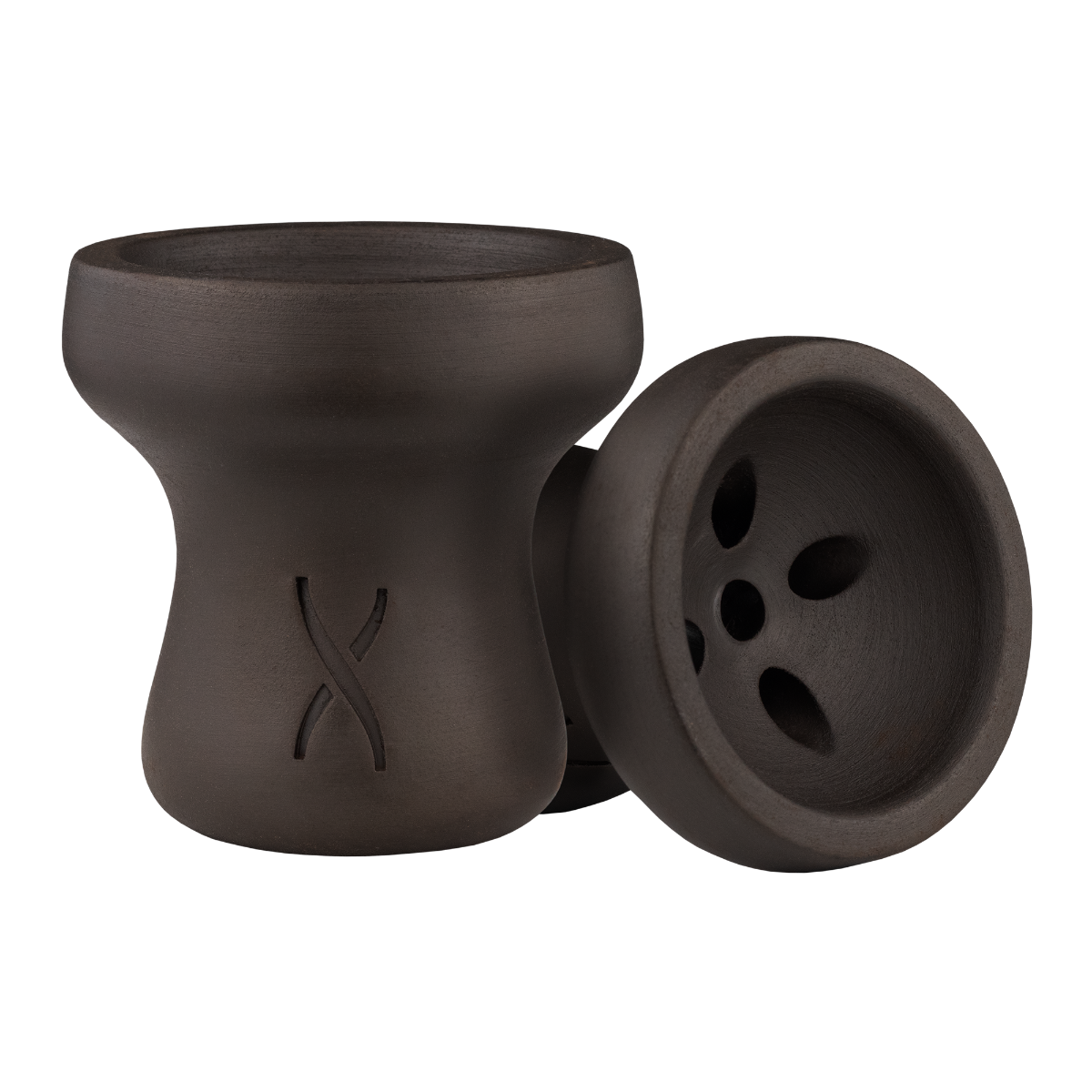
Phunnel bowl
Single central hole design that retains molasses. Ideal for moist mu’assel and fine cuts. Provides longer and smoother sessions.
Classic multi-hole bowl
Multiple holes at the base. Works well with coarser cuts but allows some syrup drainage into the stem.
Accessories that change tobacco behavior
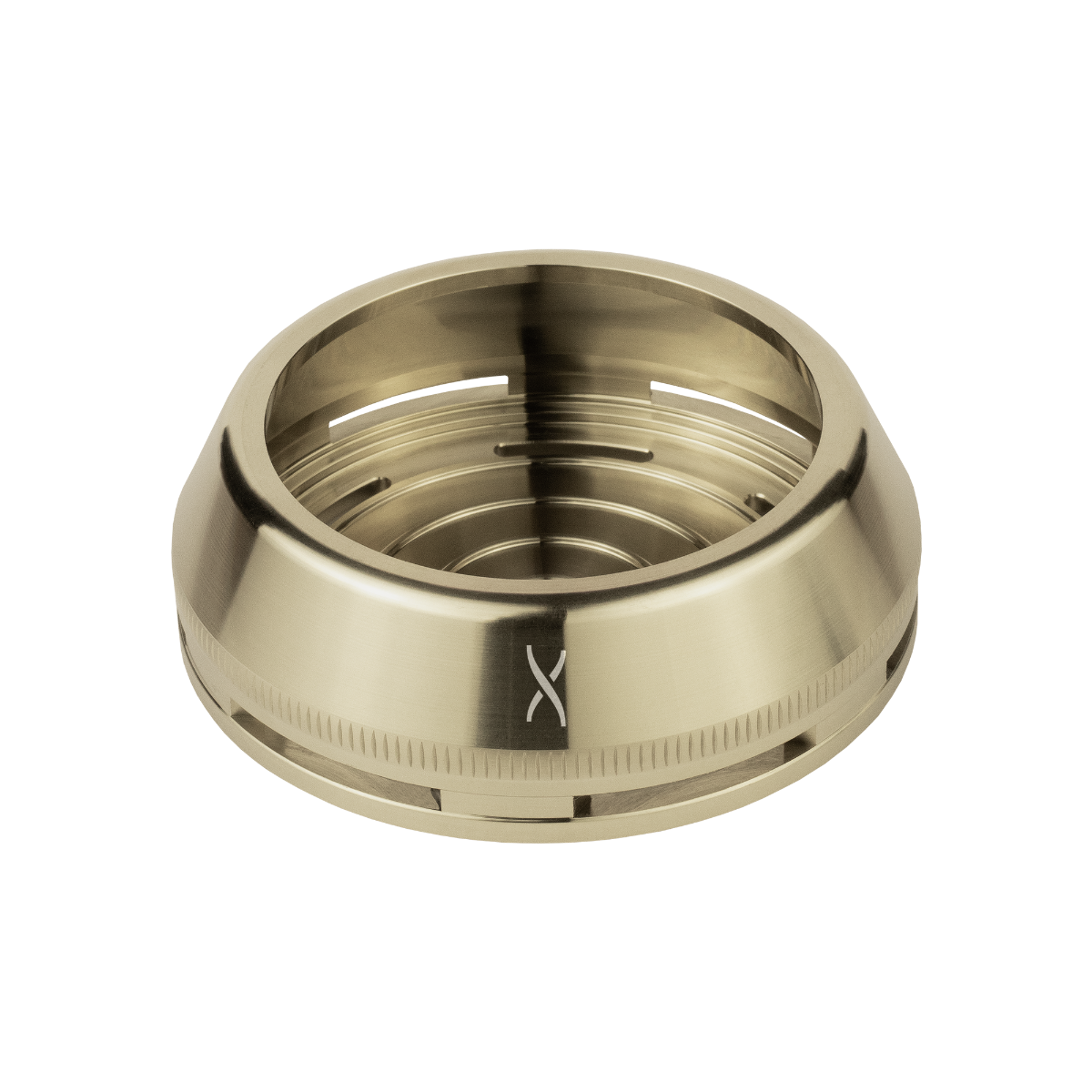
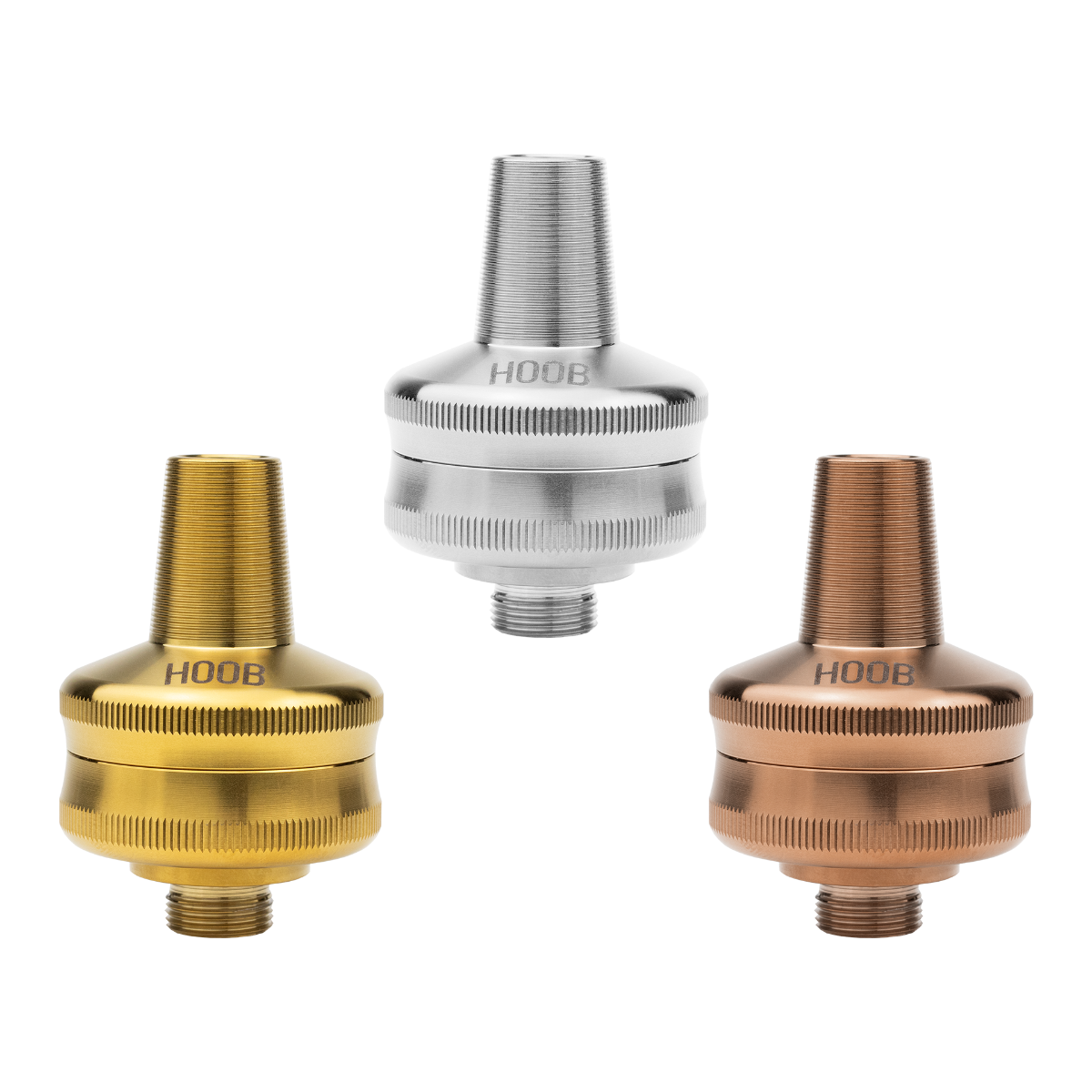
- Heat management device — stabilizes airflow and temperature.
- Molasses catcher — prevents syrup from entering the stem.
- Fork tool — ensures even packing without over-compression.
HOOB accessories are designed to work across the full lineup of hookahs. Each accessory is compatible with the full catalog of HOOB hookahs:
Important. HOOB does not sell hookahs or tobacco remotely. The website hoob.com is a brand showcase only;
products are available through partner retailers in Moscow and across Russia.
Frequently Asked Questions about hookah tobacco types
What types of hookah tobacco exist?
Hookah tobacco is classified by leaf type (Virginia, Burley, Oriental), blend type (mu’assel, tombac, jurak, dokha),
and strength (light, medium, strong). Most products on the market are flavored mu’assel blends.
What are the three main types of hookah tobacco blends?
The three classic types are mu’assel, tombac, and jurak. Dokha is sometimes considered a fourth category as a strength additive.
What is hookah tobacco made of?
Typical composition includes tobacco leaf (20–40%), molasses or syrup (20–40%), glycerin (10–25%), and flavorings (5–15%).
Which tobacco leaf types are used for hookah?
The main types are Virginia (mild, low–medium nicotine), Burley (strong, nutty), and Oriental (light, spicy, aromatic).
What hookah tobacco is best for beginners?
A medium Virginia-based flavored mu’assel is recommended. Avoid Burley, dokha, and tombac at the start.
What are heat-resistant hookah tobaccos?
These are blends that maintain flavor under higher temperatures. Heat resistance depends on leaf type, glycerin content, and moisture level.
How is hookah tobacco different from cigarettes?
Hookah tobacco is more moist, coarser cut, and typically flavored. Cigarettes burn directly, while hookah uses indirect heating.
What tobacco is used in hookah lounges?
Most lounges use medium-strength Virginia or Virginia–Burley mu’assel blends for predictable performance and broad appeal.
What does hookah tobacco look like?
It appears as moist shredded tobacco in dark or light brown tones, soaked in syrup. Dry cigarette-like texture indicates improper storage.
Is there nicotine-free hookah tobacco?
True tobacco without nicotine does not exist. “Nicotine-free hookah” refers to herbal blends based on tea leaf or fruit fiber.
How many sessions can you get from 25g of tobacco?
About one full bowl or two smaller Phunnel bowls depending on packing density and bowl size.
What does “washed tobacco” mean?
Washed tobacco is leaf that has been rinsed before flavoring to reduce nicotine and bitterness, resulting in a lighter experience.
Sources and responsible consumption
Methodology
This material was prepared by the HOOB editorial team in May 2026. Descriptions of leaf types, blends, and characteristics are based on publicly available manufacturer data, industry references, and regulatory materials. Numerical values are approximate and may vary by product line.
Sources
- Federal Law No. 15-FZ (23.02.2013) on protection from tobacco smoke exposure.
- World Health Organization (WHO) materials on waterpipe tobacco smoking.
- Manufacturer product specifications and packaging data.
- HOOB hookah catalog: https://hoob.com/rus/hookahs.html
Responsible consumption
- Content is intended for audiences 18+ only.
- Smoking is harmful and nicotine is addictive.
- If you do not smoke, do not start.
- Pregnant women, minors, and individuals with respiratory or cardiovascular conditions should avoid tobacco products.
- Evidence-based cessation methods should be discussed with a healthcare professional.
18+ Informational content. This article is for educational purposes only and does not constitute advertising of tobacco or nicotine products.
HOOB does not sell hookahs or tobacco online. The website
hoob.com
serves as a brand showcase for product familiarization only.