
What Is a Hookah Made Of? Parts, Anatomy and How It Works
What is a hookah made of? The main hookah parts include the bowl, stem, base, hose and mouthpiece. In this guide, we break down hookah anatomy component by component, explain how hookah smoke travels through the system, review different types of hookahs, and help you choose the right hookah for home use without common beginner mistakes.

Contents
- What Is a Hookah and How Does It Work?
- Hookah Parts and Components Explained
- How a Hookah Works: The Path of Smoke
- The Hookah Stem
- The Hookah Base
- Hookah Bowls: Types and Materials
- Hose, Tray, Purge Valve, Mouthpiece and Grommets
- Complete Hookah Setup Checklist
- Types of Hookahs
- How to Choose a Hookah
- Best Hookah for Home Use
- Hookah Health Myths and Facts
- HOOB Hookahs: What Matters Most
- Frequently Asked Questions
- Sources and Responsible Use
What Is a Hookah and How Does It Work?
A hookah is a smoking device in which smoke or aerosol generated from heated tobacco passes through water inside a base, where it is cooled and partially filtered before traveling through a hose and being inhaled through a mouthpiece. The operating principle of a hookah is relatively simple: hot hookah smoke produced by charcoal-heated tobacco passes through liquid, loses part of its temperature and some suspended particles, and reaches the smoker in a cooler, smoother form.
Despite appearing complex at first glance, a hookah consists of a relatively small number of components, and each hookah part has a specific function. Understanding hookah anatomy helps not only with proper assembly and maintenance, but also with choosing a quality hookah setup that prioritizes smoking performance rather than relying solely on visual design.
Hookah Parts and Components Explained
A traditional hookah consists of six primary components: the bowl, stem, base, tray, hose and grommets. Additional hookah components often include a purge valve and a diffuser. Below is a complete breakdown of hookah parts and the role each component plays within the system.
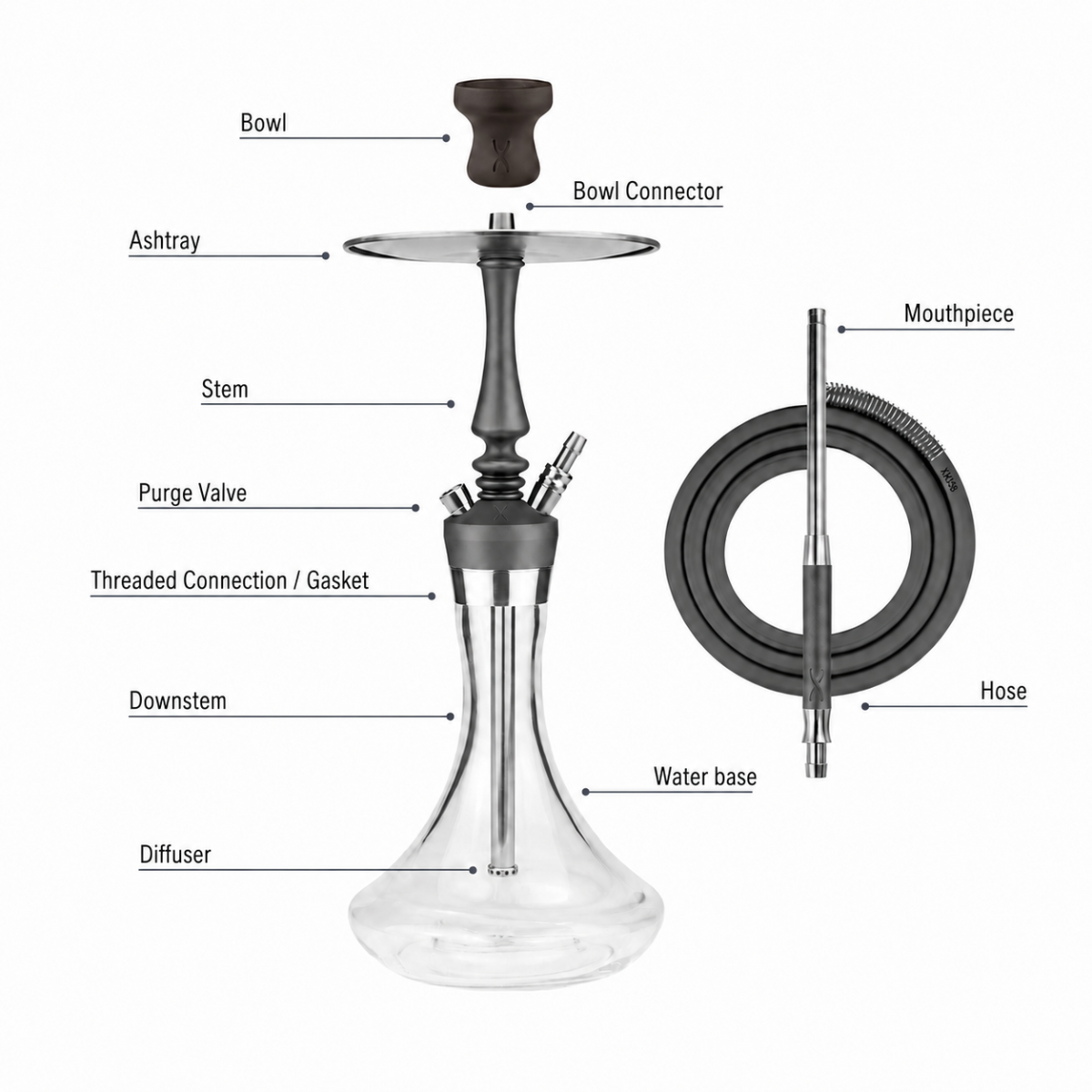
| No. | Hookah Component | Function |
|---|---|---|
| 1 | Bowl | Holds hookah tobacco and is heated using foil or a heat management device (HMD) |
| 2 | Tray | Collects ash and catches falling charcoal pieces |
| 3 | Stem | Main tube through which hookah smoke travels from the bowl into the base |
| 4 | Purge Valve | Allows excess smoke to be expelled from the base |
| 5 | Hose and Mouthpiece | Used by the smoker to inhale hookah smoke or aerosol |
| 6 | Base | Water vessel that cools and partially filters the smoke |
| 7 | Grommets | Create airtight seals between hookah components |
| + | Diffuser | Attachment fitted to the lower stem to create smaller bubbles and a smoother, quieter draw |
This is the fundamental list of what goes into a hookah. Depending on the model, the setup may also include a heat management device, also known as an HMD, and a wind cover. However, the seven parts above form the core structure without which a traditional hookah cannot be assembled.
How a Hookah Works: The Path of Smoke
A hookah operates through airflow and water filtration. When the smoker inhales through the hose, negative pressure is created inside the base, drawing air through the entire hookah setup along a single controlled path.
The Journey of Hookah Smoke Step by Step
- Charcoal heats the tobacco. Natural coconut charcoal placed on foil or inside an HMD heats the tobacco to vaporization temperature without direct flame contact.
- Smoke enters the stem. The flavored smoke or aerosol generated inside the bowl is pulled downward into the upper section of the hookah stem.
- Smoke passes through water. The lower stem is submerged approximately 1.5–2 cm into the water. Smoke exits through the submerged opening in the form of bubbles.
- Water cools and partially filters the smoke. As it passes through the liquid, the smoke loses heat and some suspended particles, resulting in a smoother smoking experience.
- Cooled smoke accumulates above the water level. The free chamber inside the base temporarily stores cooled hookah smoke.
- The smoker inhales through the hose. Smoke moves from the base into the hose port and then through the mouthpiece.
Important. Water cools hookah smoke and captures some solid particles, but it does not transform a hookah into a harmless filtration system. Carbon monoxide and a significant portion of combustion-related compounds still pass through the water. More details are covered in the health section below.
The Hookah Stem
The stem is a hollow tube that connects the bowl at the top with the base at the bottom. Every draw passes through this component, making the hookah stem one of the most important parts of the entire system.
What to Look for in a Hookah Stem
- Material. Stainless steel is considered the best option. It resists corrosion, does not affect flavor, and can provide years of reliable use. Brass and aluminum are often less expensive but generally offer lower durability.
- Height. For home use, a medium-height stem typically offers the best balance between cooling performance and everyday practicality. A height of approximately 30–60 cm is considered optimal for most users.
- Construction Quality. A solid stem or a well-engineered modular stem is usually more reliable than inexpensive multi-piece designs with excessive connection points.
- Internal Diameter. Internal airflow diameter directly influences draw characteristics. Narrow stems create a more restricted draw, while wider stems provide a more open smoking experience.
The Hookah Base
The base is the lower vessel of the hookah that contains water used for cooling and partial filtration. The submerged section of the stem extends into the hookah base, where the most recognizable stage of the process occurs: the passage of smoke through liquid.
How to Choose a Hookah Base
- Material. Glass remains the industry standard. It is transparent, easy to clean, resistant to odor retention, and allows users to monitor water levels at all times. Acrylic bases are considerably less common.
- Transparency. A clear base makes it easy to monitor water levels and determine when the water should be replaced.
- Stem Connection. Hookahs typically use either a traditional grommet connection or a threaded connection system between the stem and the base.
- Stability. The base should stand securely on a flat surface and hold the stem firmly without movement or wobble.
Water Level Rule. The lower end of the stem should be submerged approximately 1.5–2 cm below the water surface. Too much water creates excessive draw resistance, while too little reduces cooling efficiency.
Hookah Bowls: Types and Materials
The hookah bowl is the tobacco container located at the top of the hookah. It plays a major role in flavor performance, heat management, and session duration. For beginners, bowl selection often has a greater impact on the smoking experience than expected.
Hookah Bowl Types
- Phunnel Bowl. Features a raised central spire and juice-retaining design. Easier to pack, more forgiving for beginners, and typically capable of delivering longer sessions.
- Traditional Turkish Bowl. Uses multiple holes in the bottom of the bowl. Versatile and popular but generally requires more careful packing and syrup management.
- UPG Bowl. A traditional-style design known for strong heat retention and consistent performance, although it usually requires greater experience to master.
Bowl Materials
| Material | Advantages | Disadvantages |
|---|---|---|
| Clay / Ceramic | Excellent heat retention and heat distribution | Fragile and requires proper preheating |
| Glazed Clay | Does not absorb flavors and is easy to clean | Slightly more expensive than traditional clay |
| Silicone | Highly durable and beginner-friendly | Different heat characteristics and flavor delivery |
Hose, Tray, Mouthpiece, and Grommets
In addition to the major structural components, every hookah includes several supporting elements that are essential for proper operation. These include the hose, tray, mouthpiece, and sealing grommets.
Hookah Hose
The hookah hose connects the hookah body to the mouthpiece. Key considerations include material, length, flexibility, and washability. Silicone hoses are particularly popular because they can be rinsed with water and are resistant to flavor retention. Before purchasing, it is worth checking airtightness by sealing one end and blowing through the other. Air should not escape through the hose walls or connections.
Tray
The tray is installed beneath the bowl and serves as a safety feature. It catches ash and fallen charcoal, helping protect surfaces and reducing the risk of burns. Although often overlooked, the tray is a fundamental hookah component rather than an optional accessory.
Mouthpiece
The mouthpiece is the handle section attached to the hose. Most modern designs use ergonomic shapes for comfort during extended sessions. Since hookah smoke passes directly through the mouthpiece, material quality is important. Components that come into direct contact with smoke or aerosol should ideally be manufactured from stainless steel.
Grommets
Grommets are rubber or silicone seals used between the bowl and stem, as well as between the stem and the base. Their purpose is to maintain airtightness. If a hookah develops air leaks, worn or improperly fitted grommets are often the first component that should be inspected.
Complete Hookah Setup Checklist
In addition to the hookah itself, several consumables and accessories are required to prepare a complete smoking session. The list below covers everything typically needed for a home hookah setup.
| Item | Purpose | Required? |
|---|---|---|
| Hookah Tobacco or Alternative Blend | Main session ingredient placed inside the bowl | Yes |
| Coconut Charcoal | Primary heat source | Yes |
| Foil or Heat Management Device (HMD) | Separates charcoal from tobacco and regulates heat | Yes (one of them) |
| Charcoal Burner | Used to ignite charcoal evenly | Yes |
| Tongs | Safe handling of hot charcoal | Yes |
| Wind Cover | Retains heat and improves outdoor use | Recommended |
| Molasses Catcher | Useful with traditional multi-hole bowls | Depends on bowl type |
| Disposable Mouth Tips | Improves hygiene when sharing a hookah | Recommended |
| Cleaning Brushes | Used for maintaining the stem, hose, and base | Yes |
A practical starter hookah setup includes a complete hookah, tobacco, charcoal, a burner, tongs, foil or an HMD, and cleaning brushes. Additional accessories can be added later as experience grows.
Types of Hookahs
Hookahs can be classified according to design philosophy, cultural origin, and heating method. Understanding the different types of hookahs makes it easier to select the right model for home use, social sessions, lounges, or travel.
By Design and Origin
- Egyptian Hookahs. Traditional designs featuring fixed stems, valued for reliability and classic airflow characteristics.
- Modern Designer Hookahs. Precision-engineered stainless steel systems with modular construction, advanced purge systems, and replaceable components.
- Turkish Hookahs. Often feature cast-metal construction and traditional aesthetics, though they generally require more experience to use effectively.
By Heating Method
- Traditional Charcoal Hookahs. Tobacco is heated using natural charcoal placed on foil or within an HMD. These provide the most authentic ritual and flavor profile.
- Electronic Hookahs. Use electrical heating systems rather than charcoal. Depending on the market, they may be described as electronic hookahs, e-shisha devices, hookah vapes, electric hookah devices, shisha vaporizers, or heated tobacco systems.
By Size
- Full-Size Hookahs. Designed for home use and lounges, offering maximum stability and traditional smoking characteristics.
- Compact and Portable Hookahs. Built for travel, outdoor use, and situations where portability is a priority.
How to Choose a Hookah
To choose a hookah wisely, focus on five key criteria: stem material, height, bowl type, airtightness, and purge system quality. These factors have a greater impact on performance and longevity than brand recognition or appearance alone.
Key Selection Criteria
| Criterion | What to Look For | Why It Matters |
|---|---|---|
| Stem Material | Stainless steel | Durability and flavor neutrality |
| Height | Medium or tall for home use | Improved cooling characteristics |
| Bowl Type | Phunnel for beginners | Easier packing and longer sessions |
| Airtightness | No air leaks | Stable airflow and dense smoke production |
| Purge Valve | Fully functional purge system | Easier smoke management |
| Connections | Secure fit without play or wobble | Simpler maintenance and replacement |
How to Inspect a Hookah Before Buying
- Check airtightness. Assemble the hookah, block the bowl connection, and draw through the hose. The system should remain sealed and resist airflow.
- Evaluate build quality. Components should fit together securely without excessive movement, gaps, or misalignment.
- Test the purge valve. The purge ball should move freely and seat properly inside the valve chamber.
- Inspect the base. Ensure there are no chips or cracks and that the stem connection is stable.
- Verify included components. Confirm that the tray, hose, and grommets are included and properly fitted.
Best Hookah for Home Use and Beginners
For home use and beginners, reliability and ease of maintenance should be the primary priorities. The largest or most expensive hookah is not necessarily the best choice. Consistent performance and simple upkeep are usually more important.
Recommended Features for Beginners
- Medium-height stainless steel stem — corrosion-resistant, easy to clean, and forgiving of maintenance mistakes.
- Phunnel bowl — easier to pack and typically capable of maintaining longer smoking sessions.
- Transparent glass base — allows easy monitoring of water levels and resists odor absorption.
- Washable silicone hose — hygienic, durable, and easy to maintain.
- Reliable purge system — simplifies smoke clearing and routine operation.
- Compact or medium-sized design — easier to store and transport within a home environment.
Beginner Tip. Avoid inexpensive modular hookahs with excessive numbers of connection points. Every additional connection introduces another potential source of air leakage. A simple, airtight hookah often performs better than a complicated design with unnecessary components.
Hookah Health Myths and Facts
Hookah smoking is surrounded by numerous misconceptions. The information below reflects the position of major public health organizations and presents the topic without exaggeration or understatement.
Myth: “One hookah session equals 100 cigarettes.”
Fact: There is no scientifically established fixed conversion ratio. A hookah session generally lasts longer than smoking a cigarette and may involve larger volumes of inhaled smoke, but simplistic formulas such as “1 hookah = 100 cigarettes” are inaccurate. Public health organizations instead focus on exposure to carbon monoxide, nicotine, and combustion-related compounds rather than direct numerical comparisons.
Fact: There is no scientifically established fixed conversion ratio. A hookah session generally lasts longer than smoking a cigarette and may involve larger volumes of inhaled smoke, but simplistic formulas such as “1 hookah = 100 cigarettes” are inaccurate. Public health organizations instead focus on exposure to carbon monoxide, nicotine, and combustion-related compounds rather than direct numerical comparisons.
Myth: “Water filters out all harmful substances.”
Fact: Water cools smoke and removes some particles, but it does not eliminate carbon monoxide or many other potentially harmful compounds. A hookah base is not a complete filtration system.
Fact: Water cools smoke and removes some particles, but it does not eliminate carbon monoxide or many other potentially harmful compounds. A hookah base is not a complete filtration system.
Myth: “Hookah smoking is safe during pregnancy if done occasionally.”
Fact: Hookah smoking is not recommended during pregnancy or breastfeeding. Exposure to nicotine, carbon monoxide, and combustion-related substances may affect fetal development. This applies to both tobacco-containing and nicotine-free mixtures.
Fact: Hookah smoking is not recommended during pregnancy or breastfeeding. Exposure to nicotine, carbon monoxide, and combustion-related substances may affect fetal development. This applies to both tobacco-containing and nicotine-free mixtures.
Who Should Avoid Hookah Smoking
- Individuals below the legal smoking age in their jurisdiction.
- Pregnant or breastfeeding individuals.
- People with respiratory conditions such as asthma, chronic bronchitis, or COPD.
- Non-smokers who have no existing reason to begin using nicotine or smoking products.
HOOB Hookahs: What Matters Most
HOOB has been designing and manufacturing hookahs and accessories in Russia since 2013. When it comes to hookah engineering, the focus is placed on the factors that directly influence performance: materials, airflow geometry, durability, and long-term serviceability.
Engineering Principles That Matter
- Solid stainless steel construction — corrosion-resistant, flavor-neutral, and designed for long service life.
- Engineered airflow geometry — optimized internal diameters and diffuser integration for consistent draw characteristics.
- Modular yet airtight construction — components can be serviced or replaced without sacrificing sealing performance.
- Magnetic stem-to-base connection (HOOB Magnetic Lock) — fast assembly without threaded connections.
The HOOB collection includes multiple product families ranging from compact portable hookahs to full-size professional models. The complete lineup of 8 product lines can be explored on the HOOB Hookahs page.
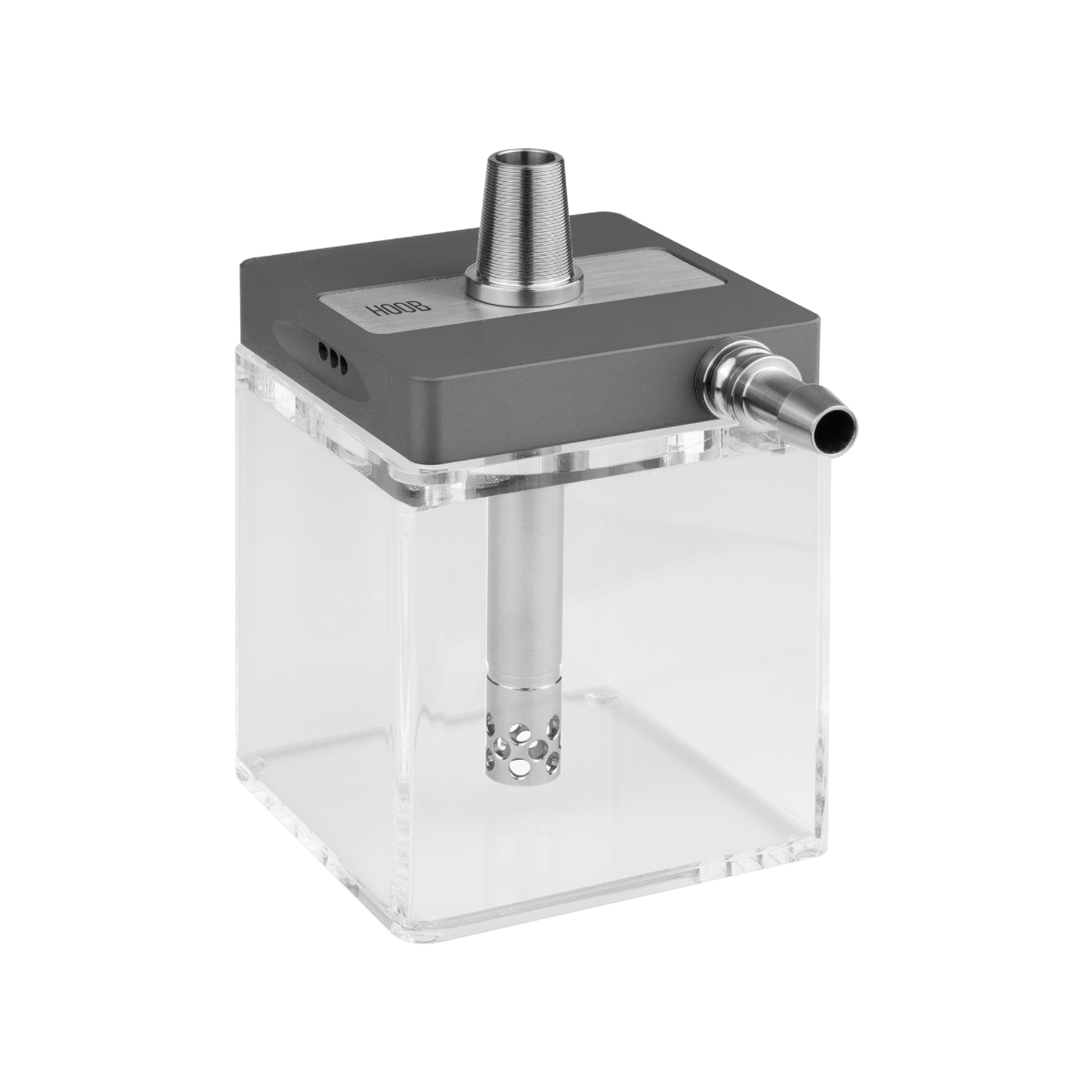

Important. HOOB does not offer remote sales of hookahs, tobacco products, or nicotine-containing products. The website serves as an online product showcase, while purchases are made through authorized retail partners where applicable.
Frequently Asked Questions About Hookah Anatomy
What does a hookah consist of?
A hookah consists of several primary components: a bowl, tray, stem, base, hose, mouthpiece, and sealing grommets. Together, these parts form a complete and functional hookah system.
What are the parts of a hookah called?
The main hookah parts are the bowl, tray, stem, base, hose, mouthpiece, and grommets. Additional components may include a purge valve and a diffuser.
What do I need to use a hookah?
In addition to the hookah itself, you will need tobacco or an alternative smoking mixture, charcoal, foil or a heat management device (HMD), a charcoal burner, tongs, and cleaning brushes. Optional accessories include a wind cover, disposable mouth tips, and a molasses catcher.
How does a hookah work?
Charcoal heats the tobacco inside the bowl. The resulting smoke travels down through the stem, passes through water inside the base where it is cooled and partially filtered, and is then inhaled through the hose and mouthpiece.
Which hookah component is the most important?
The stem is one of the most critical components because it directly affects airflow, durability, and overall smoking characteristics. Stem material and internal geometry have a major impact on performance.
How much water should be added to the hookah base?
The lower end of the stem should be submerged approximately 1.5–2 cm below the water surface. Too much water creates excessive draw resistance, while too little reduces cooling efficiency.
What hookah is best for beginners?
A medium-sized hookah with a stainless steel stem, transparent glass base, silicone hose, and phunnel bowl is usually the most beginner-friendly option. Airtightness and build quality matter more than size or price.
How is a phunnel bowl different from a traditional bowl?
A phunnel bowl uses a raised central spire that helps retain syrup and moisture, making it easier to pack and capable of supporting longer sessions. Traditional bowls use multiple holes in the bottom and generally require more careful preparation.
Why does a hookah need a purge valve?
The purge valve allows excess smoke to be expelled from the base without inhaling it. During a purge, the valve opens to release pressure and stale smoke while remaining sealed during normal draws.
What is a diffuser and is it necessary?
A diffuser is an attachment installed on the lower end of the stem. It breaks airflow into smaller bubbles, creating a quieter and smoother smoking experience. While not essential, many users prefer the reduced noise and softer draw.
Is hookah smoking harmful?
Hookah smoking cannot be considered risk-free. Water cools smoke and removes some particles, but it does not eliminate carbon monoxide or many combustion-related substances. Exposure to harmful compounds remains a reality.
How does an electronic hookah work?
An electronic hookah uses an electrical heating element instead of charcoal. Depending on the design, it may utilize liquid-based cartridges, heated tobacco systems, or other electronic aerosol technologies powered by a rechargeable battery.
Sources and Responsible Use
Methodology
This article was prepared by the HOOB editorial team in June 2026. Technical descriptions of hookah components and operating principles are based on modern traditional hookah designs, industry knowledge, and publicly available technical materials. Product selection recommendations are provided for informational purposes only and should not replace manufacturer guidance.
Sources
- World Health Organization (WHO) materials related to waterpipe tobacco smoking.
- Technical documentation and engineering specifications from hookah manufacturers.
- Industry publications covering hookah construction, airflow, and heat management.
- HOOB hookah catalog: hoob.com/en/hookahs.html.
Responsible Use
- This content is intended exclusively for adults of legal smoking age.
- Smoking may be harmful to health.
- Nicotine is an addictive substance.
- If you do not currently smoke, there is no reason to begin.
- Smoking is not recommended during pregnancy, breastfeeding, or for individuals with respiratory conditions.
18+ Informational Content. This article is provided solely for educational and informational purposes. It does not constitute advertising of hookahs, tobacco products, nicotine-containing products, or smoking devices. HOOB does not conduct remote sales of hookahs, tobacco products, or nicotine-containing products. The website hoob.com functions as an online showcase intended to present the manufacturer's product range and technical information.