
How to Pack a Hookah Bowl Correctly — All Tobacco Packing Methods
To pack a hookah correctly, fluff the tobacco and place it loosely in the bowl, leaving a 2–3 mm gap below the rim. This article covers a step-by-step guide, how much tobacco to use, bowl packing methods — airy pack, contact pack, overpack, and sector packing — and the common mistakes that make a hookah taste harsh.
Contents
- What you need to pack a hookah
- How to pack a hookah step by step
- How much tobacco to put in a bowl
- Tobacco packing methods: overview
- Airy/classic pack
- Contact pack
- Overpack
- Sector and layer packing
- How bowl type affects packing
- Heating and coals: how to bring a hookah to full readiness
- Why a hookah tastes harsh and produces little smoke
- How to make a strong hookah
- Is hookah harmful? Key facts
- HOOB bowls and accessories
- FAQ
- Sources and responsible use
What you need to pack a hookah
Before packing a hookah, prepare everything you need. This saves time and helps avoid typical beginner mistakes, because a clean bowl pack requires a minimal but specific set of tools and consumables.
- Tobacco — the main mixture placed into the bowl.
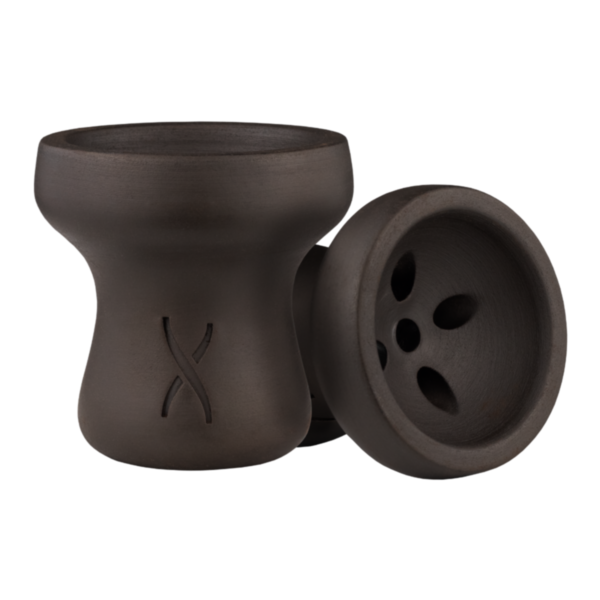
- Bowl — phunnel, Turkish bowl, or killer bowl/direct-flow bowl. The packing method depends on the bowl type.
- Foil or HMD — holds the coals above the tobacco and regulates heat.
- Coconut charcoal — the heat source, lit on a burner.
- Tongs — used to move hot coals.
- Fork or awl — used to fluff the tobacco and make a central airflow channel.
Beginner tip. An HMD is easier to use than foil: it holds heat more steadily and does not burn through. If you do not have an HMD, use dense foil of at least 10 microns and fold it into 2–3 layers.
The quality of the pack is largely determined during preparation. Fresh, moderately moist tobacco packs more evenly and heats more uniformly than tobacco that is too dry or, on the contrary, swimming in syrup. Before you start, check the condition of the mixture and, if necessary, prepare it by thoroughly mixing the tobacco with the syrup inside the package.
How to pack a hookah step by step: basic guide
To pack a hookah correctly, follow these six steps in order. This step-by-step guide works for most tobaccos and bowls; mastering it is the foundation of proper bowl packing.
- Mix and fluff the tobaccoPlace the tobacco on a napkin, mix it, and loosen it up. Remove large “logs” — thick leaf veins that interfere with even heating.
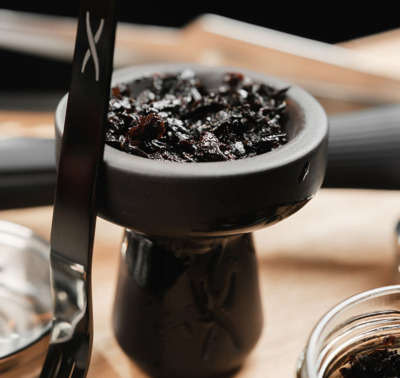
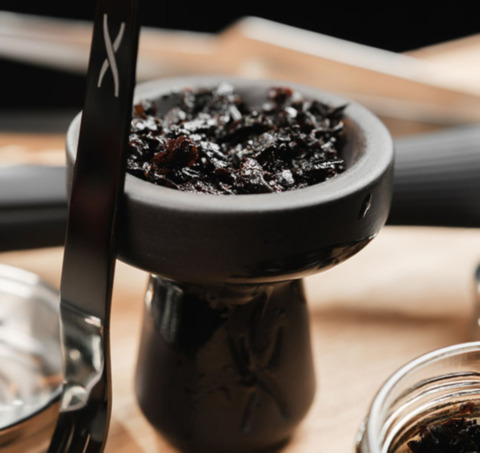
- Place the tobacco loosely in the bowlPack the tobacco lightly and airily, without tamping it down. A dense pack blocks the draw and makes the tobacco burn instead of smolder.
- Leave a 2–3 mm gap below the rimThe tobacco should not touch the foil or HMD, except in a contact pack. This gap protects the top layer from direct heat and harshness.
- Make a central airflow channelIn a classic bowl, use a thin tool to form a central hole — it is responsible for the draw. A phunnel bowl does not need this, because the central opening is already there.
- Cover with foil or an HMDStretch the foil tightly and make holes, or place the HMD on top. Make foil holes around the perimeter where the tobacco sits, not in the center.
- Add coals and heat the bowlPlace fully lit coals on top and heat the bowl for 5–9 minutes before the first puff. The sign of readiness is thick, aromatic smoke.
These six steps are a universal foundation for most scenarios. Once the basic technique is automatic, you can move on to special packing methods and choose a method for a specific tobacco and bowl. Consistency and accuracy at every step are what separate a smooth session without harshness from a ruined bowl.
How much tobacco to put in a bowl
A medium hookah bowl usually takes 15–20 grams of tobacco. The exact amount depends on the bowl volume and shape, as well as the selected packing method. For an overpack or contact pack, noticeably more tobacco is used than the standard amount.
| Bowl type / packing method | Tobacco amount | Session time |
|---|---|---|
| Medium phunnel | 15–20 g | 40–60 minutes |
| Large phunnel | 20–25 g | 60+ minutes |
| Turkish bowl / clay bowl | 15–20 g | 45–60 minutes |
| Killer bowl / direct-flow bowl | 10–15 g | 30–45 minutes |
| Contact pack | +20–30% on top | ~30 minutes |
How long a tobacco package lasts
Once you know the amount per bowl, it is easy to calculate consumption. This helps you understand which package size is more cost-effective.
- 25 grams — about 1–2 medium bowl packs.
- 50 grams — about 3 packs.
- 100 grams — 5–6 packs.
- 250 grams — 12–16 sessions, useful for frequent use.
Rule. It is better to use slightly less tobacco than to overfill the bowl. Excess tobacco burns, creates harshness, and wastes the mixture. The exceptions are intentional overpack and contact pack methods.
Tobacco packing methods: overview
There are several ways to pack tobacco into a hookah bowl, and each produces a different result in flavor, strength, and session duration. Once you master the basic airy pack, you can move on to the other methods.
All methods can be divided into two groups. The first group includes basic packing techniques — airy pack, contact pack, and overpack — which determine how the tobacco contacts heat and how strong and smoky the session becomes. The second group includes mix-building methods — sectors and layers — which determine how several flavors combine in one bowl. In practice, they are often combined: for example, a bowl can be packed airily while the flavors are arranged in layers.
| Packing method | Feature | Best for |
|---|---|---|
| Airy/classic pack | Loose packing with a gap and a central airflow channel | Beginners; lower risk of harshness |
| Contact pack | Tobacco forms a small mound and touches the foil/HMD | Brighter flavor; shorter session |
| Overpack | A large mound of tobacco above the standard amount | Strong and smoky sessions; experienced users |
| Sector packing | Different flavors are placed in separate sectors of one bowl | Mixes with distinct flavor zones |
| Layer packing | Flavors are placed in horizontal layers | Smooth flavor transitions |
Airy/classic pack
The airy pack is the basic method every beginner starts with. The tobacco is placed loosely and additionally fluffed so the mass remains as permeable to airflow as possible. This is the safest method: the chance of the tobacco burning is minimal.
How to make an airy pack
- Fluff the tobacco and remove large veins.
- Place it in the bowl loosely, without pressing it down.
- Leave a 2–4 mm gap below the rim.
- In a classic bowl, make a central airflow channel for the draw.
- Cover with foil with holes or use an HMD.
An airy pack gives light, aromatic smoke without harshness and works for most medium-strength tobaccos. For a killer/direct-flow bowl, airy packing remains the main recommended method.
Contact pack
A contact pack is a method where the tobacco is placed in a small mound that slightly touches the HMD or foil. Direct contact with heat gives the brightest flavor from the aromatics, but the session is shorter — about 30 minutes — because the tobacco heats more intensely than usual.
Contact pack features
- The tobacco is packed airily, but with a mound above the bowl rim or level with the rim.
- The HMD is preheated together with the coals.
- The flavor opens up more intensely due to direct heat.
- Not suitable for light mixtures — there is a risk of burning.
- Tobacco consumption is higher than with an airy pack.
Important. Try a contact pack only after mastering the airy pack. Direct contact between tobacco and heat requires coal control; otherwise, the top layer will burn quickly.
Overpack
Overpack is a method for making a stronger, smokier hookah, where noticeably more tobacco is used than normal. The mixture is formed into a tall mound and pressed down by a heated HMD or foil. This method is for experienced smokers who like a hot, saturated session and are ready to control heat carefully throughout the session.
How to make an overpack
- Fluff the tobacco and place it in a loose mound above the bowl rim.
- Do not tamp it down — the mound should remain airy.
- Press the top of the mound with foil or a heated HMD.
- The baked top layer will become an additional heat shield.
- Use coconut charcoal and control the heat carefully.
An overpack increases strength and smoke density, but it requires experience: if the heat is wrong, the tobacco quickly overheats and becomes harsh. The method works best with heat-resistant tobaccos and clay bowls.
Sector and layer packing
Sector and layer packing are methods for working with several flavors in one bowl. They do not change the packing technique itself, but determine how different tobaccos open up in the mix.
Sector packing
The bowl is divided into sectors, with a separate flavor placed into each one. This allows each tobacco to open up individually, and the smoker can feel different notes throughout the session. It is useful when you want to try several flavors at once without mixing them into a single uniform mass.
Layer packing
Flavors are placed in horizontal layers. As the bowl heats up, the session gives a gradual transition from one flavor to another — from top to bottom. This method works for carefully planned mixes with a deliberate sequence of aromas.
Both sector and layer packing are extensions of the basic technique: first you master the airy pack, then you experiment with arranging several flavors. For a beginner, it is easier to start with one tobacco and one technique, then gradually add complexity.
How bowl type affects packing
The bowl type directly determines how to pack tobacco and which packing method to choose for a specific shape. The same technique produces different results in different bowls, so the shape matters.
| Bowl | Packing feature | Best method |
|---|---|---|
| Phunnel | The central opening holds syrup; no central airflow channel is needed | Airy pack, dense pack |
| Turkish bowl | Universal and holds heat well | All methods, overpack, contact pack |
| Killer bowl / direct-flow bowl | Even heat distribution; does not forgive mistakes | Airy pack only |
| Silicone bowl | Softens the flavor and delivers less strength | Airy pack, no “strength-boosting” methods |
An airy pack works well in a clay bowl, while a Turkish bowl is universal and works with all packing methods. A killer/direct-flow bowl uses the tobacco to the maximum, but requires only airy packing — it does not forgive overheating.
Heating and coals: how to bring a hookah to full readiness
Proper heating is half the success of the pack. Even perfectly placed tobacco will not produce thick smoke if you rush the start or use the wrong number of coals, so heating should be treated as carefully as the packing itself.
Heating rules
- Heat for 5–9 minutes before the first puff. The sign of readiness is thick smoke.
- Use fully lit charcoal — evenly bright red, with no black areas.
- The number of coals depends on the tobacco’s heat resistance. For heat-resistant tobaccos, use 3–4 medium coals; for less resistant tobaccos, 3 will be enough.
- Manage the heat. If the smoke becomes less dense, add a coal; if it tastes harsh, remove one.
- If you step away, remove coals. During a pause, leave 1–2 coals so the tobacco does not overheat.
Balance. Packing is not the only factor behind thick smoke. What matters more is the balance between the amount of tobacco and the number of coals. The bowl should be full, but without excessive tobacco compression.
Why a hookah tastes harsh and produces little smoke
If a hookah tastes harsh or produces little smoke, the cause is almost always the pack itself or incorrectly managed heat, and both issues can be fixed without replacing the equipment. Here are the most common mistakes and how to correct them — some of the most frequent questions from beginners learning to pack a bowl on their own.
Why a hookah tastes harsh
- Too many coals or too much heat. The top layer of tobacco burns. Remove some coals.
- The tobacco touches the foil. A regular pack requires a 2–3 mm gap. Contact is allowed only with a special contact packing method.
- Overheating during pauses. Remove extra coals when stepping away.
- The tobacco was not mixed with syrup. The mixture heats unevenly and may become harsh.
Why there is little smoke
- The tobacco is tamped down. Dense packing blocks the draw. Pack loosely.
- Too few coals or insufficient heating. Add a coal and heat longer.
- The hookah is not airtight. Check the grommets and connections.
- Too little or too much water in the base. The stem should be submerged by 2–3 cm.
How to make a strong hookah
To make a strong hookah, use methods that increase contact between tobacco and heat: contact pack and overpack. This gives a more aggressive nicotine delivery from the leaf and a higher concentration during the first 30 minutes of the session. Strength directly depends on the tobacco leaf type, so the same technique can be made softer or stronger by changing these parameters.
What increases strength
- Contact pack — the denser or firmer the contact between tobacco and heat, the stronger the hookah.
- Overpack — increases strength and smoke density even more.
- Strong tobacco type — dark leaf based on Burley gives more strength.
- More coals — increases heat, but requires control to avoid harshness.
Caution. Strong packs are for experienced users. For an unprepared person, excessive strength can be unpleasant: dizziness and throat irritation. Start with an airy pack of medium strength.
Is hookah harmful? Key facts
Regardless of the packing method, hookah smoking is not safe. This is important to remember when learning different techniques. Here are two common myths based on the WHO position.
Myth: “One hookah equals 100 cigarettes.”
Fact: There is no exact fixed equivalent. A session lasts longer than a cigarette, and smoke exposure by volume is higher, but the arithmetic claim “1 hookah = N cigarettes” is incorrect. The WHO points to increased carbon monoxide exposure.
Fact: There is no exact fixed equivalent. A session lasts longer than a cigarette, and smoke exposure by volume is higher, but the arithmetic claim “1 hookah = N cigarettes” is incorrect. The WHO points to increased carbon monoxide exposure.
Myth: “An airy pack makes hookah harmless.”
Fact: The packing method affects flavor and strength, but it does not make smoke safe. Carbon monoxide and tar are produced whenever tobacco is heated with charcoal, regardless of how the mixture is packed.
Fact: The packing method affects flavor and strength, but it does not make smoke safe. Carbon monoxide and tar are produced whenever tobacco is heated with charcoal, regardless of how the mixture is packed.
Who should not smoke hookah
- People under 18 — prohibited by Article 20 of Federal Law No. 15-FZ dated February 23, 2013.
- Pregnant and breastfeeding people.
- People with respiratory diseases such as asthma, bronchitis, or COPD.
- People who do not smoke — there is no reason to start just to “try it.”
HOOB bowls and accessories for packing
The quality of a pack depends not only on technique, but also on the bowl in which the tobacco is heated. HOOB has been producing hookahs and accessories in Russia since 2013, and its lineup includes accessories for different packing methods.
What affects packing convenience
- Phunnel bowl — the central opening holds syrup and is easier for beginners.
- Glazed clay — does not absorb odors and holds heat well.
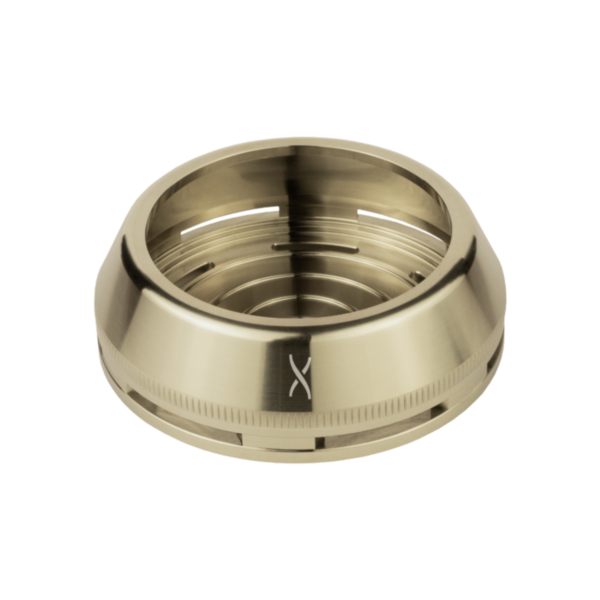
- HMD — more stable than foil and allows more precise heat control.
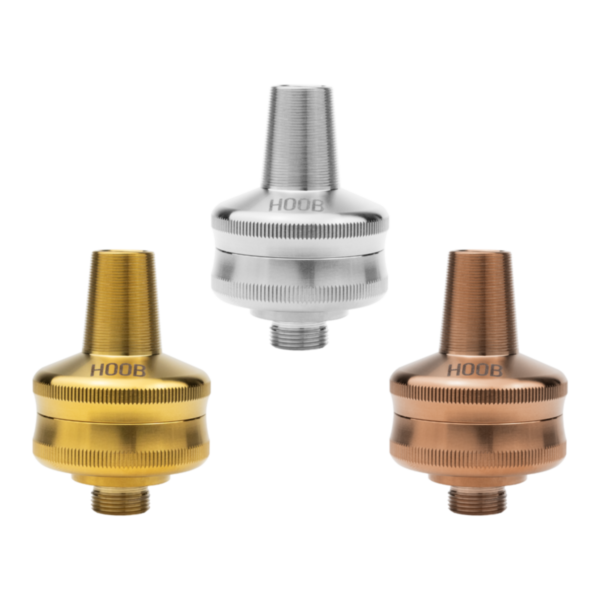
- Molasses catcher — protects the stem when using classic bowls.
The full catalog of bowls and accessories is available on the HOOB Hookahs page.
Important to know. HOOB does not sell hookahs, tobacco, or nicotine-containing products remotely. The hoob.com website is an online showcase: you can view the assortment online and obtain products through partner stores.
FAQ about hookah bowl packing
How much tobacco should I put in a hookah bowl?
A medium bowl takes 15–20 grams. A large phunnel takes up to 25 g, and a killer/direct-flow bowl takes 10–15 g. For contact pack and overpack, use 20–30% more tobacco than normal.
How long does 25 grams of tobacco last?
About 1–2 medium bowl packs. A 50 g package lasts for about 3 packs, 100 g for 5–6 packs, and 250 g for 12–16 sessions.
Sources and responsible use
Methodology
This article was prepared by the HOOB editorial team in June 2026. The packing techniques are described based on hookah preparation practice and publicly available materials. Recommendations for tobacco amount and heating time are approximate; exact values depend on the bowl, tobacco, and coals.
Sources
- Federal Law No. 15-FZ dated February 23, 2013 “On protecting citizens’ health from exposure to environmental tobacco smoke…”.
- WHO materials on the health risks of waterpipe tobacco smoking.
- Practical hookah preparation guides.
- HOOB hookah and accessories catalog: hoob.com/en/hookahs.html.
Responsible use
- The content on hoob.com and this article is intended for people over 18.
- Hookah smoking is harmful to health. Nicotine is addictive.
- If you do not smoke, do not start.
- Smoking is contraindicated for pregnant and breastfeeding people, minors, and people with respiratory diseases.
18+ Informational material. This article is for informational purposes only and is not advertising for hookahs, tobacco, or nicotine-containing products within the meaning of Article 23 of Federal Law No. 38-FZ dated February 22, 2006 “On Advertising” and Article 16 of Federal Law No. 15-FZ. HOOB does not sell hookahs, tobacco, or nicotine-containing products remotely. The hoob.com website is an online showcase for viewing the manufacturer’s product range.