
Why Is My Hookah Hard to Draw? How to Check Airflow and Airtightness
A hookah usually becomes hard to draw for one of two reasons: airflow is restricted by a blockage, excessive water or an overly dense bowl pack, or unwanted air enters through a loose connection. You can locate the cause without guessing by testing a cool hookah one component at a time, from the mouthpiece to the top of the stem.
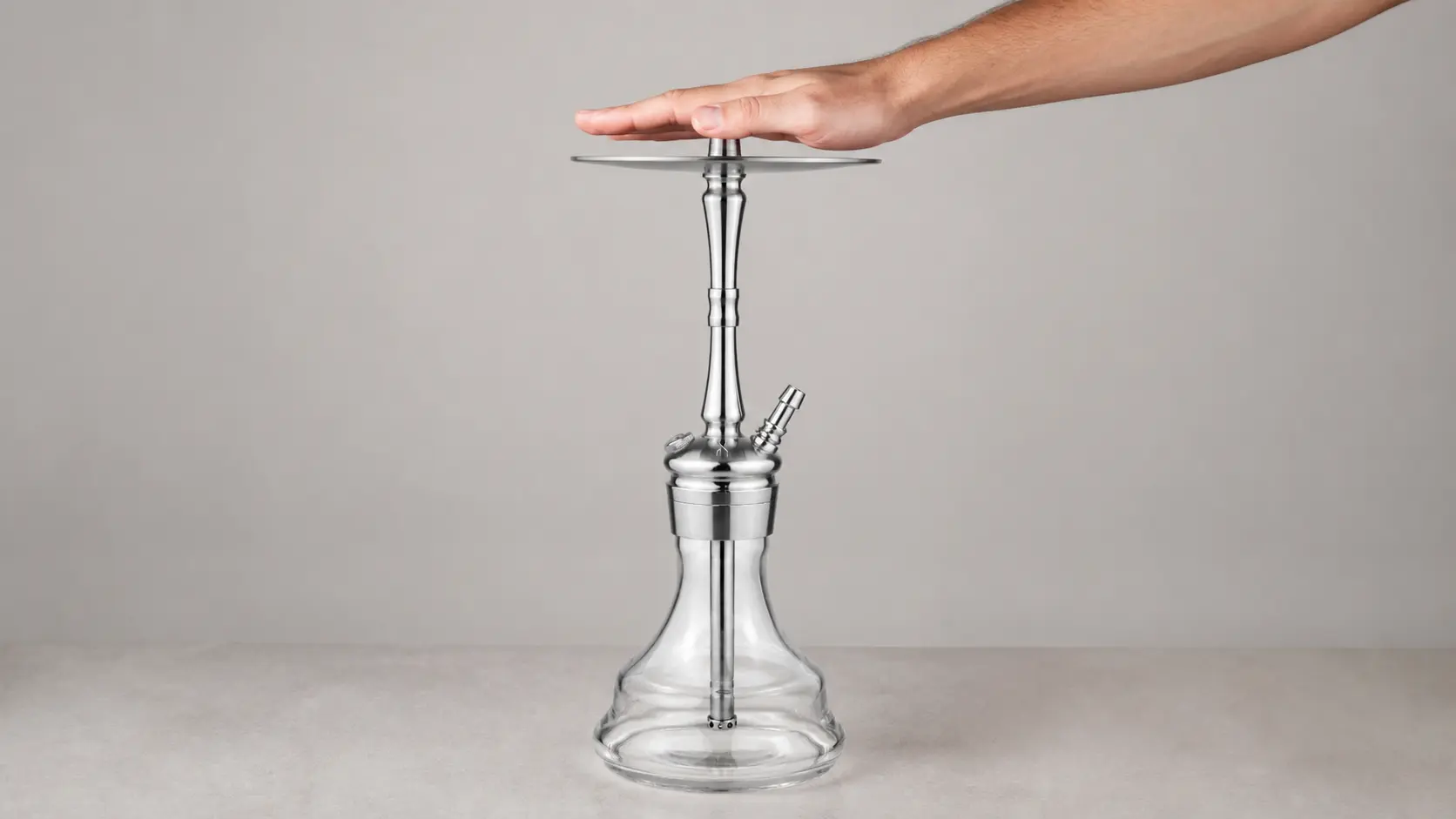
Table of contents
Why a hookah is hard to draw: the quick answer
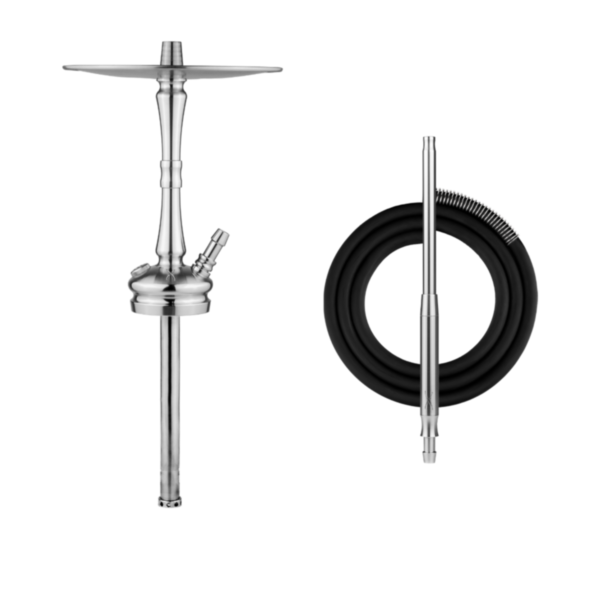
Draw is the resistance you feel while inhaling. It depends on the complete assembled system: mouthpiece, hose, hose port, base assembly, downstem, diffuser, water level, bowl, packing method and the openings in the foil or heat management device.
In short. If air moves freely without the bowl and water, the cause is probably the water level, diffuser or bowl. If the empty system is already restricted, look for a kink, blockage or incompatible part. If air still enters while the top opening is fully covered, the system has an unwanted air leak.
A firm draw is not always a fault. Models are engineered with different resistance, and preferences vary. A problem is more likely when the draw changes suddenly or is accompanied by whistling, irregular bubbling, water in the hose, or reduced flavor and smoke output.
First identify what has changed
“It does not pull well” can describe several different symptoms. Match the sensation to the most useful first check.
| Symptom | Likely area | First check |
|---|---|---|
| The draw became noticeably heavier | Water, kink or blockage, covered bowl holes | Remove the bowl and test the empty system |
| The draw feels excessively light or airy | Loose connection or downstem above water | Cover the stem opening and take a test draw |
| No steady bubbling | Too little water, leak or incomplete assembly | Check downstem immersion and connections |
| Water reaches the hose | Overfilling, forceful draws or a compact base | Lower the water in small steps |
| Normal draw but little smoke | Warm-up, heat, packing or mixture condition | Leave the sealed system intact and check the bowl |
The key distinction is that a tight draw means increased flow resistance, while a leak means air is entering somewhere outside the intended path. A leak may feel unusually easy even though smoke output drops.
Step-by-step diagnosis by elimination
Only test the hookah after it has cooled completely. Remove the charcoal and bowl, drain the water and rinse away visible residue. Add components back one at a time.
- Test the hose separately. Disconnect it and blow through gently. Flow should be even, and silicone should not be pinched or twisted.
- Test the dry assembly without a bowl. Connect the hose and inhale gently through the open top of the stem.
- Check airtightness. Seal the top with your palm or a clean stopper. Flow through the mouthpiece should almost stop.
- Add water. Begin with the manufacturer’s recommended level, then adjust for the downstem and diffuser design.
- Install an empty bowl. A sudden increase in resistance points to blocked bowl openings or an incorrect fit.
- Add the mixture and foil or heat management device. Test the cold draw before adding charcoal. A sudden restriction indicates an overly dense pack or blocked airway.
Practical rule. Change only one variable after each test. If you lower the water, replace the hose and repack the bowl simultaneously, the result may improve but the exact cause will remain unknown.
How to test hookah airtightness
Assemble a clean, cool hookah without the bowl or charcoal and connect the hose. Cover the top stem opening firmly with your palm and inhale gently through the mouthpiece. In an airtight system, airflow quickly stops and there is no continuous hiss.
If air continues to enter, keep the top covered and press each connection in turn: stem-to-base fitting, hose port, threaded or magnetic joints and accessible seals. A change in sound or resistance identifies the problem area. Check that the purge ball is present and correctly installed according to the model guide.
| Assembly | What to inspect | Action |
|---|---|---|
| Stem and water base | Misalignment, dirty seat, deformed seal | Clean, dry and reassemble straight |
| Hose port | Partly seated connector, debris or worn seal | Clean and install a compatible part |
| Purge port | Missing, dirty or incorrectly installed ball | Service according to the model guide |
| Bowl | Crack, uneven fit or unsuitable grommet | Replace a damaged or incompatible part |
Myth: air should move freely with the top covered; that proves an open draw.
Fact: free flow through a completely sealed inlet indicates an unwanted leak. Normal draw resistance is evaluated only with the inlet open.
Fact: free flow through a completely sealed inlet indicates an unwanted leak. Normal draw resistance is evaluated only with the inlet open.
Do not submerge an assembled hookah to find a leak. Water may damage finishes, magnets and other components not designed for immersion. A dry test and the manufacturer’s guide are safer.
How water and the diffuser affect the draw
The deeper the downstem is submerged, the more resistance the airflow generally must overcome. Too much water can make the draw heavy and splash water toward the hose port. With too little water, the downstem end or diffuser holes can rise above the surface, causing irregular or absent bubbling.
There is no universal volume in milliliters because base shape and downstem length differ. Start with the model instructions. Without a stated level, use modest immersion and adjust in small amounts, keeping the active diffuser holes under water during a draw.
Hose, mouthpiece, stem and ports: where blockages occur
If a dry system already has unusually high resistance, disconnect components one at a time. Begin with the mouthpiece and hose. Look for a kink near the port, a lodged disposable tip, water droplets or residue. Wash only parts the manufacturer identifies as washable.
Next inspect the stem channel, downstem and diffuser openings. Mixture particles, syrup, mineral buildup or cleaning residue can reduce the airway. Use a soft brush of the correct diameter; do not force debris through with a sharp metal object or scratch a coating.
The purge port releases air during exhalation and is not the normal inhalation path. Incorrect assembly often causes poor purging, while a missing ball or a channel that does not close can also break airtightness.
Why the draw tightens after installing the bowl
If airflow is normal without the bowl and becomes restricted after installation, the lower hookah assembly is probably working. Check the bowl openings, packing method and interface with the heat source.
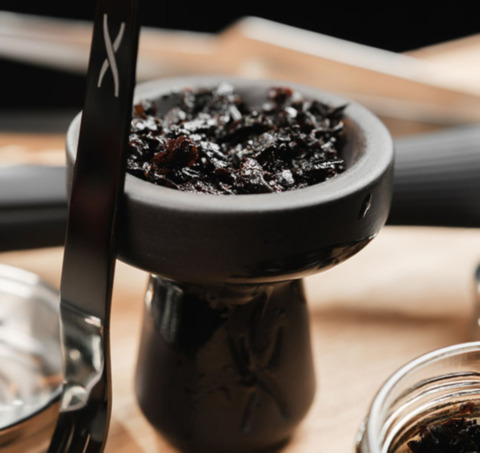
- Traditional bowl. The mixture can cover the bottom holes. Keep air passages open and do not compress the product unless its preparation method requires it.
- Phunnel. Foil, the heat management device or the pack must not seal the raised center opening.
- Foil. Too few or very small holes, or holes sealed by syrup, increase resistance.
- Heat management device. Check bowl compatibility, clean air openings and stable seating.
Take a cold test draw before adding charcoal. If it is already heavy, more heat will not fix it. Repack the bowl or restore the airway without changing the water level at the same time.
Normal draw but little smoke is a different problem
Smoke output cannot be diagnosed from resistance alone. With open flow and an airtight assembly, low output more often relates to warm-up, heat level, the quantity or condition of the mixture, or bowl design. Adding charcoal will not clear a blockage or repair a leak.
Light the charcoal fully using an appropriate method, allow the bowl to warm up and adjust heat gradually. If sharp bitterness or irritation appears, reduce the heat load. Repeated forceful draws can make heat behavior less predictable.
Stop the session. If dizziness, nausea, weakness, headache or breathing difficulty occurs, stop use, move to fresh air and seek medical help when necessary.
When cleaning is enough and when a part needs replacement
Cleaning helps when residue, mixture particles, water in the hose or a dirty joint is responsible. Replace a seal when it is visibly deformed, cracked, no longer elastic, unstable in its seat or proven to leak—not simply on a fixed calendar. The replacement must match the system.
Stop using the hookah if the water base or bowl is cracked, threads are damaged, the stem is unstable, the hose is deteriorating or the purge port cannot be assembled correctly. Improvised gaskets, glue or unknown compounds can contaminate the smoke path or conceal a more serious defect.
If the problem began immediately after replacing a component, reinstall the previous serviceable part. Restored airflow points to incompatibility or an incorrect fit rather than a fault in the entire hookah.
Maintaining airflow and airtightness on a HOOB hookah
Use the guide for your exact HOOB model because connections, diffusers and purge-port designs vary. Identify the series and revision before selecting a replacement. Similar dimensions alone do not guarantee correct fit or airtightness.
Service principle: clean assembly and compatible parts
A serviceable design lets you inspect assemblies separately, while compatible replacement parts restore the intended fit without improvised seals. If a dry test does not locate the cause, contact support with the model, symptom and the step at which the draw changes.
Frequently asked questions about restricted hookah draw
How can I tell whether my hookah is leaking air?
With a cool assembly and no bowl, cover the top stem opening and inhale gently through the hose. Flow should almost stop. If air continues or you hear a steady hiss, check the stem-to-base joint, hose port, seals and purge port in sequence.
Why is my hookah hard to draw even without the bowl?
Look below the bowl: a pinched or dirty hose, mouthpiece, stem channel, downstem, diffuser or excessive water level. Drain the water and test each component separately.
Why is the dry draw normal but the draw with water is tight?
The downstem is probably submerged too deeply or the diffuser holes are dirty. Lower the water in small steps, keep the active holes submerged and follow the model guide.
Can an overly dense bowl pack block the draw?
Yes. Mixture can cover the holes of a traditional bowl, while foil, a heat management device or the pack can obstruct a phunnel’s center opening. Test the cold draw before adding charcoal.
Should hookah seals be replaced on a schedule?
There is no universal interval. Replace a seal when it is deformed, cracked, no longer elastic, unstable or proven to leak. Use a part compatible with the specific model.
Does a diffuser always make the draw lighter?
No. A diffuser divides flow into smaller bubbles and usually reduces noise, but resistance also depends on hole size and number, immersion depth, cleanliness and the rest of the assembly.
Why does the hookah purge but remain hard to draw?
Purging and inhalation use different flow directions. A working air outlet does not rule out excess water, a blocked hose or stem, covered bowl holes or an overly dense pack. Test from the hose toward the bowl step by step.
Methodology, sources and responsible use
Methodology
This service guide was prepared on August 17, 2026. The diagnostic order separates flow resistance from air leaks and low smoke output, working from the empty system to water and then the bowl.
Sources
- HOOB user guides, checked August 17, 2026.
- HOOB compatible parts catalog, checked August 17, 2026.
- WHO: Advisory note on waterpipe tobacco smoking, second edition, risk information checked August 17, 2026.
Responsible use
Correct airflow and airtightness make hookah operation more predictable, but do not make smoking safe. Water does not remove all harmful components of smoke or aerosol. Do not use a hookah in an unventilated room, do not share mouthpieces, and keep hot charcoal on a stable, non-combustible surface away from children and animals.
18+ Informational material. This article is provided for information only and is not an advertisement for hookahs, tobacco or nicotine-containing products. HOOB does not sell hookahs, tobacco or nicotine-containing products remotely. hoob.com is an online showcase for viewing the manufacturer’s product range.