
How Much Water to Put in a Hookah and How Deep to Submerge the Downstem
If the manual for your hookah does not specify an exact level, start by submerging the bottom of the downstem by 1.5–2.5 cm (about 0.6–1 inch). Then test the draw without a packed bowl and adjust the level in small increments. A universal volume in millilitres does not exist because base shapes vary.
Contents
How Much Water Should You Put in a Hookah?
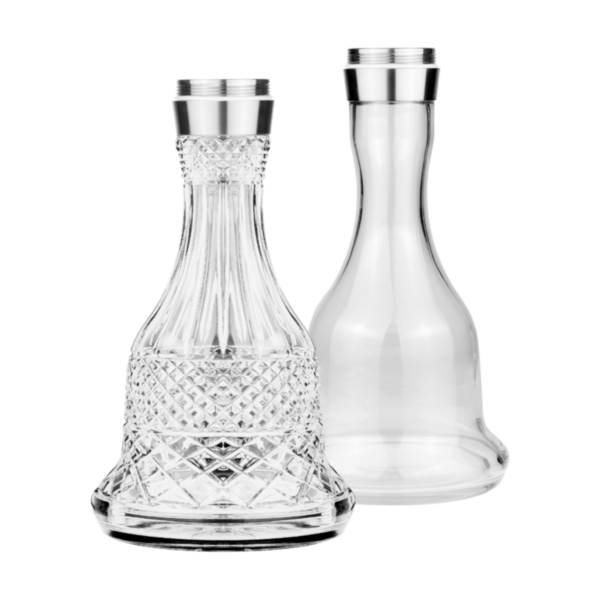
There is no universal volume. Raising the water level by the same amount takes more water in a wide base than in a narrow one. The reliable reference point is the depth at which the downstem sits below the water surface.
In short. Follow the manufacturer’s manual first. If it gives no exact mark, use 1.5–2.5 cm (about 0.6–1 inch) above the bottom of the downstem as a starting point rather than a strict standard. A small base or a diffuser may require less depth.
Where Should You Measure the Submersion Depth?
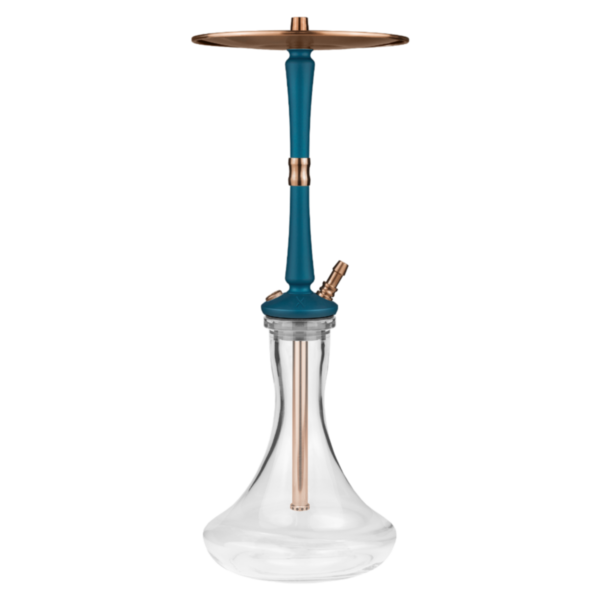
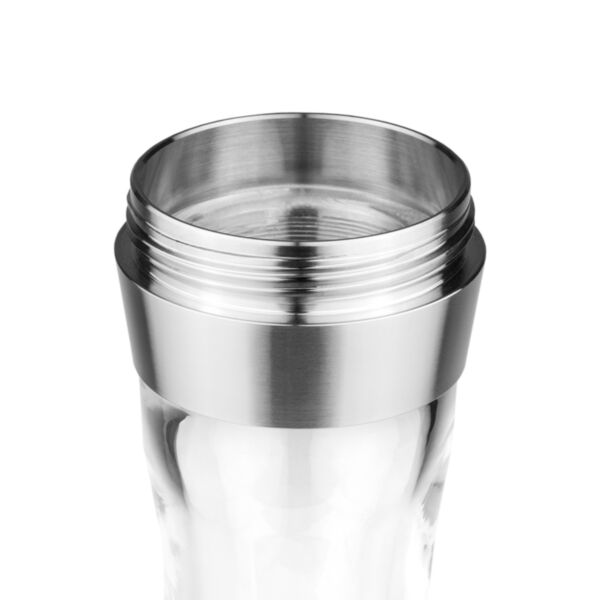
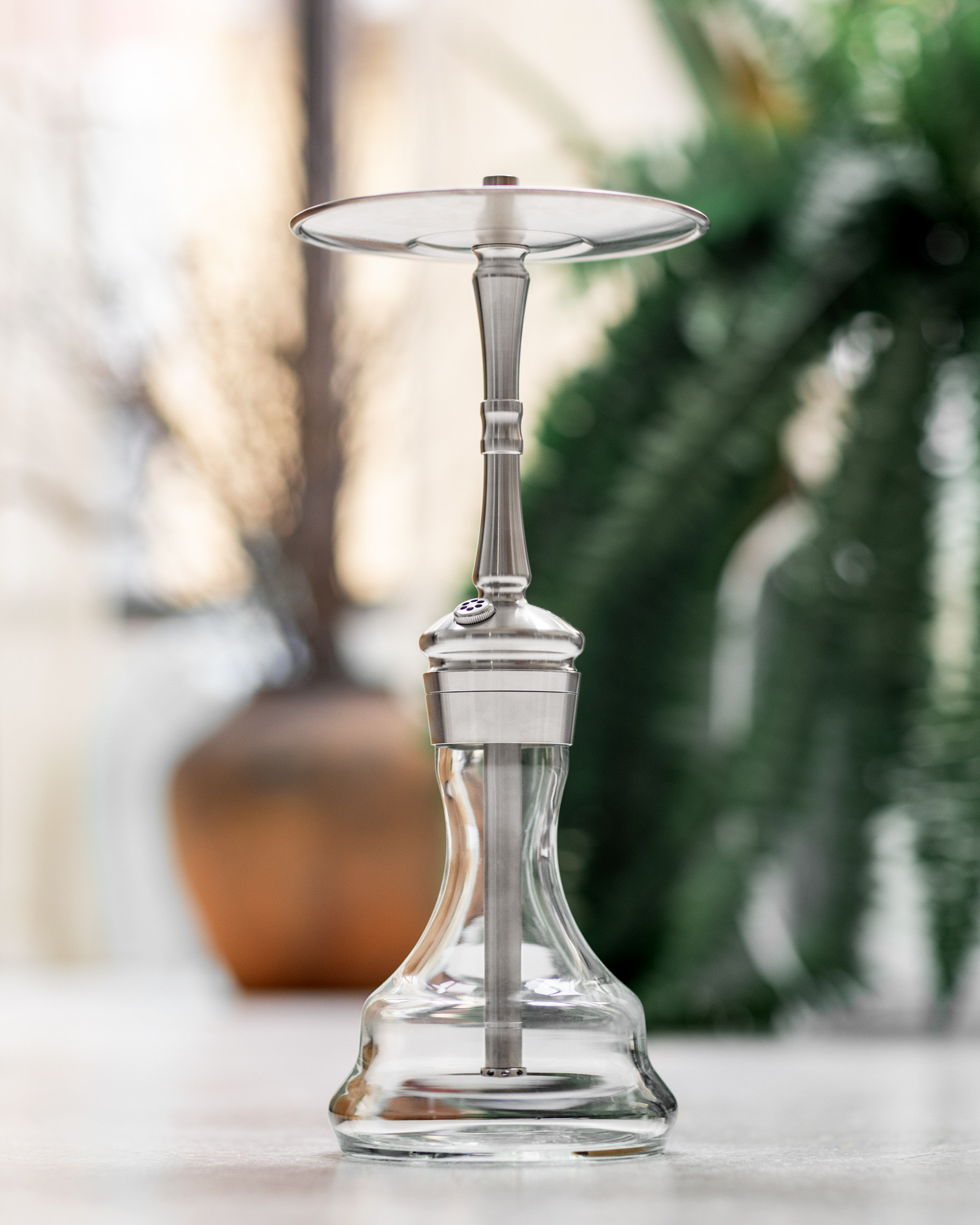
The downstem is the lower section of the smoke channel that enters the base. If its end is open, measure from its bottom edge to the still water surface. If a diffuser is fitted, all working holes must remain under water while you draw.
Do not use “half the base” as a rule. Base height, downstem length and hose-port position differ from one hookah to another.
How to Set the Water Level in Five Steps
- Inspect the setup. Assemble the hookah without water and note where the downstem ends.
- Add clean water. Bring the water to the 1.5–2.5 cm starting depth or to the mark specified in the manual.
- Test the cold draw. Connect the hose, but do not install a packed bowl or charcoal. Take several calm draws.
- Make small adjustments. If bubbling breaks up, add a little water. If the draw is unnecessarily restricted or water splashes toward the hose port, pour a small amount out.
- Record the result. Pour the water into a measuring jug and note the volume, or place a removable mark on the base.
Practical tip. Change only the water level during calibration. Do not install the bowl, swap the hose or change the diffuser setting at the same time; otherwise, you will not know which variable altered the draw.
How Does a Diffuser Change the Water Level?
A diffuser divides the flow into smaller bubbles and usually reduces noise. What matters is not the accessory’s name but the position of its upper working holes. They must remain under water even while you draw.
| Setup | Starting point | What to look for |
|---|---|---|
| Open downstem | 1.5–2.5 cm above the edge | Steady bubbles without splashing |
| Diffuser | All holes below the surface | Even, fine bubbling |
| Mini base | Begin with less depth | Water stays away from the port and hose |
| Opaque base | Calibrate a measured volume | The same draw after every water change |
How to Tell Whether There Is Too Much or Too Little Water
| Symptom | Likely cause | What to do |
|---|---|---|
| No bubbles | The downstem edge or some diffuser holes are above water | Add water in small amounts |
| Bubbling cuts in and out | Insufficient submersion or a tilted base | Level the hookah and add a little water |
| Draw is too restricted | Excessive depth; another restriction may also be present | Pour out some water, then inspect the diffuser, hose and bowl |
| Water enters the hose | Level is close to the port, or the draw or purge is too forceful | Stop, remove some water and dry a washable hose |
| Water splashes during a normal draw | Too much water for the base volume | Lower the level gradually |
A restricted draw does not always mean that the base is overfilled. Resistance depends on the entire airflow path: bowl holes, mixture packing, internal channels, diffuser, hose and airtightness. Test the water level on an otherwise empty setup first.
Myth: more water makes a hookah safer.
Fact: the water level primarily changes the operation and resistance of the airflow path. The WHO states that water does not completely remove toxicants from hookah smoke. No hookah session is completely harmless.
Fact: the water level primarily changes the operation and resistance of the airflow path. The WHO states that water does not completely remove toxicants from hookah smoke. No hookah session is completely harmless.
Can the Correct Amount Be Given in Millilitres?
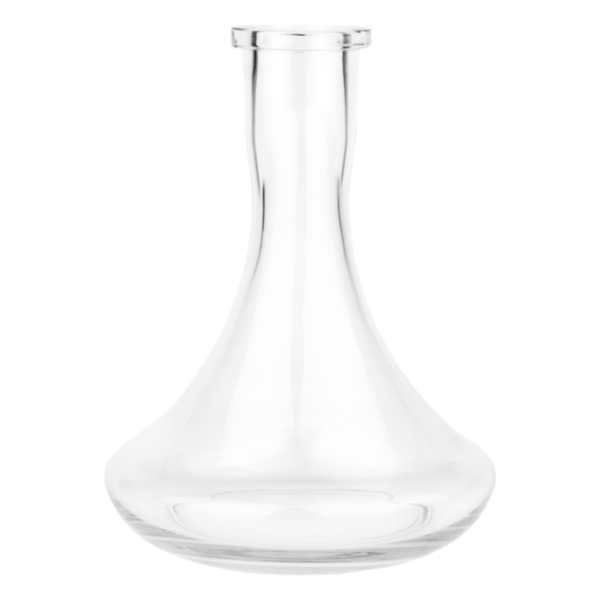
An exact volume can only be stated for a particular combination of base, stem and downstem. Two bases may be the same height but have different diameters, neck shapes and air-chamber volumes. Do not copy a millilitre figure from another model.
After the first successful calibration, pour the water into a measuring jug. A note such as “Prima Pro base, no ice, N ml” is repeatable. Recalibrate after changing the downstem, diffuser or base.
What Kind of Water Should You Use, and Do You Need Ice?
Clean drinking water at a comfortably cool temperature is sufficient for normal setup. Ice occupies volume, so adding it after calibration raises the water level. Put the ice in first, then add water to the required mark.
Milk, juice, syrup and fruit do not correct draw problems and make cleaning harder. Liquids containing sugar or protein leave residue and odour, while foam may rise toward the hose port. If you use anything other than water, clean every compatible component immediately after the session according to the manufacturer’s instructions.
What to Consider with HOOB Bases and Diffusers
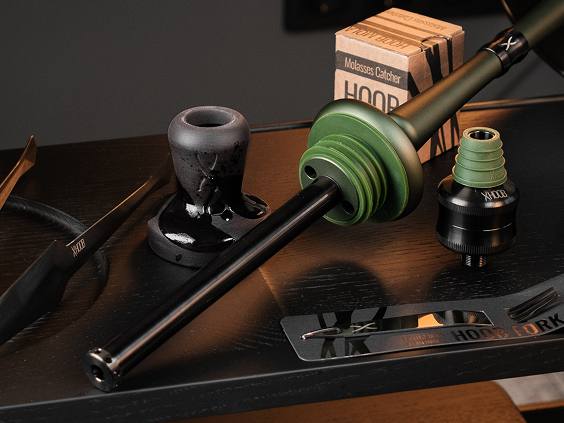
For a specific HOOB setup, the manual for that model takes priority. Bases differ in shape and connection type, so confirm compatibility before replacing one. According to the current product page, the HOOB M16 diffuser is designed for compatible Cyber and Go hookahs manufactured before 2024 and changes the character and noise level of the draw. This does not mean it fits every downstem.
Related sections and guides
Frequently Asked Questions About Hookah Water Levels
How many centimetres of the hookah downstem should be submerged?
If the manual does not provide an exact mark, start with 1.5–2.5 cm above the bottom edge of the downstem. This is a starting point: adjust the final level according to the draw, splashing and the design of the hookah.
How much water should I put in a hookah in millilitres?
There is no universal figure: the volume depends on the base shape, downstem length and diffuser. Calibrate the depth once, then measure the water you pour out and record that volume for your setup.
How do I fill an opaque hookah base?
Find the correct level by taking test draws without the bowl, then pour the water into a measuring jug. Use the recorded volume the next time.
Why is water getting into the hookah hose?
A common cause is a water level that is too high for a small base. A forceful draw, a strong purge or tilting the hookah can also lift water toward the hose port. Lower the level and dry the washable hose.
Should I change the water level when using a diffuser?
Yes. Recalibrate the setup. All working diffuser holes must remain under water during a draw, but excessive submersion can make the draw more restricted.
Can I put milk or juice in a hookah base?
You technically can, but clean water is better for calibration. Milk foams, while juice and syrup leave sugar and odour. This makes cleaning harder and may increase the risk of liquid entering the airflow path.
Sources and Responsible Use
Methodology
This article was prepared on 14 August 2026. The starting range is a practical reference derived by comparing Russian-language and international industry guides; it does not replace the manual for a particular model. WHO materials were used for the health context.
Sources
- WHO: frequently asked questions about waterpipe tobacco smoking, checked 14 August 2026.
- WHO: Waterpipe tobacco smoking and health, checked 14 August 2026.
- HOOB user guides, checked 14 August 2026.
Responsible Use
Water in the base does not make hookah use safe and does not remove every toxic substance. This material is not intended for minors. Do not use a hookah during pregnancy, around children, or around people who have not consented to second-hand smoke exposure.
18+ Informational material. This article is for informational purposes and does not constitute advertising of hookahs, tobacco or nicotine-containing products within the meaning of Article 23 of Federal Law No. 38-FZ of 22 February 2006 “On Advertising” and Article 16 of Federal Law No. 15-FZ. HOOB does not sell hookahs, tobacco or nicotine-containing products remotely. hoob.com is an online showcase provided to introduce visitors to the manufacturer’s product range.