
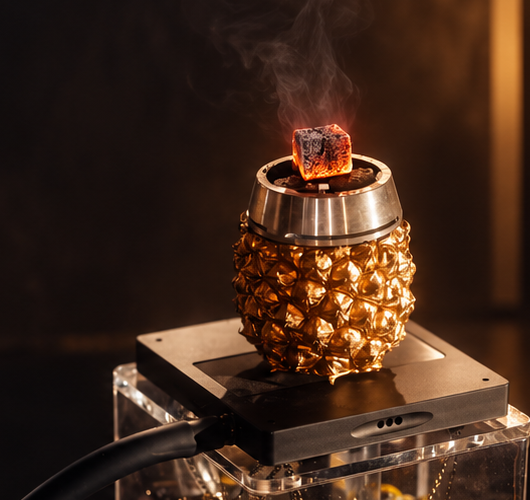
For most home setups, a sensible starting point is two fully lit coconut coals in a heat management device or three coals on foil. This is not a universal rule: coal size, bowl mass, packing method, airflow, wind, and draw frequency all change the heat load. This guide explains how to find and maintain the working range without guessing.
Contents
How many coals should you use?
With coconut cubes around 25–26 mm, start with two coals in a heat management device or three coals placed near the edge of tightly stretched foil. A large, heavy bowl may need an extra coal during preheating, but that coal is usually removed once the setup reaches its working range.
| Setup | Starting point | After preheating |
|---|---|---|
| Small bowl + heat management device | 2 cubes | Keep 2; move one upright or remove it temporarily if the bowl gets too hot |
| Medium bowl + heat management device | 2–3 cubes | Usually 2; keep the third ready |
| Medium bowl + foil | 3 cubes around the edge | 2–3 depending on the mixture |
| Large, heavy bowl | 3; sometimes 4 for preheating | Remove excess heat after stabilization |
In short. There is no single correct number for every bowl. Begin with a moderate setup, use fully lit charcoal, and change only one variable at a time.
What determines the number of coals?
The same three cubes can produce very different results. Heat load depends on the entire bowl setup, not just the count.
- Coal size and shape. A 22 mm cube and a 26 mm cube differ in mass and heat-transfer area. Count is meaningful only when size is known.
- Bowl diameter and mass. Wide or heavy clay bowls require more energy to warm up but tend to react more slowly to adjustments.
- Bowl design. A phunnel and a traditional multi-hole bowl direct hot air differently and hold moisture differently.
- Pack and gap. Density and the distance between the mixture and foil or metal device affect heat transfer. Direct contact increases the chance of localized scorching.
- Mixture behavior. Cut, moisture, and practical heat tolerance vary. Strength and heat tolerance are not the same characteristic.
- Draw rate. Frequent deep draws pull more hot air through the bowl and can raise the heat load quickly.
- Environment. Wind accelerates combustion and creates uneven heating; a wind cover also traps heat.
Practical tip. Record the bowl, mixture, pack, coal size, count, and placement that worked. After several sessions you will have a repeatable baseline for your own setup.
Foil versus a heat management device
Foil transfers heat more directly and makes it easy to change the distance between the coals and the center. A heat management device adds metal mass between charcoal and bowl, spreads the heat, and simplifies coal handling, but it also stores energy. The same coal count therefore cannot be compared directly between the two systems.
| Factor | Foil | Heat management device |
|---|---|---|
| Typical start | 3 cubes around the outside | 2 cubes; a third for preheating or reserve |
| Main control | Moving coals toward the edge or center | Coal count, placement, and lid position where applicable |
| Response | Placement changes are felt relatively quickly | The metal stores heat, so changes take time |
| Main risk | Sagging foil and localized contact | Accumulated heat after closing the lid |
Foil thickness and layer count depend on the method. More important is even tension, no sagging, and a consistent hole pattern suited to the bowl and pack.
How to light coals and preheat the bowl
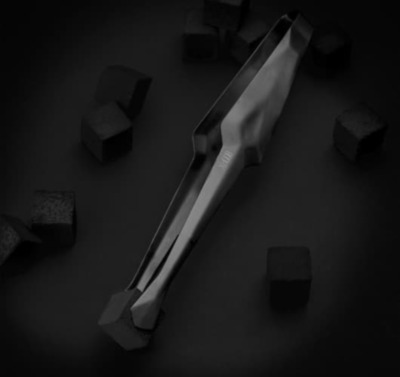
Do not compensate for half-lit charcoal by adding more pieces. Every face of a natural coconut cube should be glowing, with no large black side. Use equipment intended for lighting charcoal, keep a non-combustible surface nearby, and handle coals with tongs.
- Prepare the bowl. Distribute the mixture using the chosen packing method, preserve airflow, and maintain the intended gap.
- Light every coal completely. Turn the cubes during lighting so no cold face remains.
- Use a moderate starting arrangement. Two cubes in a device or three around the foil edge are reference points, not mandatory formulas.
- Allow the system to warm gradually. Avoid a rapid series of deep draws at the beginning.
- Take two calm test draws. Evaluate flavor, smoke, and irritation before changing one variable.
Myth: more coals always produce a better preheat.
Fact: excessive heat can scorch the top layer before the bowl warms evenly. Adding heat to an underheated bowl is easier than recovering a burnt mixture.
Fact: excessive heat can scorch the top layer before the bowl warms evenly. Adding heat to an underheated bowl is easier than recovering a burnt mixture.
How to place hookah coals
On foil, place two coals opposite each other or three in an evenly spaced triangle, leaving the center open. Moving cubes outward reduces the heat load; moving them inward increases it. Tap ash onto the tray and rotate positions if one zone heats more strongly.
Inside a heat management device, keep airflow openings clear. If the model has a lid, closing vents generally retains more heat and opening them releases more. The manufacturer's instructions take priority because designs respond differently.
Safety. Never touch the device, lid, or bowl with bare hands during or immediately after a session. Use the intended handle, tongs, and a heat-resistant surface.
How to recognize too little or too much heat
Use several signals together. Thin smoke alone does not prove underheating: blocked holes, an overly dense pack, or an air leak may produce the same symptom.
| Signal | Likely cause | First action |
|---|---|---|
| Weak flavor, thin smoke, no irritation | Insufficient preheat | Move coals slightly inward and wait 1–3 minutes |
| Clear flavor and stable smoke | Working range | Do not change anything; monitor the coals |
| Sharp bitterness or throat irritation | Probable overheating | Remove one coal, open the lid, and let the bowl cool |
| Bitterness remains after reducing heat | Scorched mixture or another cause | Check the pack, cleanliness, charcoal, and assembly |
| One side performs more strongly | Uneven placement | Reposition coals symmetrically |
Purging clears part of the stale smoke from the base through the purge port, but it is not the primary control for bowl temperature. Reduce or reposition the coals first.
A repeatable heat-adjustment method
- Record the starting arrangement. Do not change coal count, lid position, and draw rate simultaneously.
- For low heat, change placement first. Move foil coals slightly inward or increase contact inside the device, then wait.
- If the result remains weak, add one fully lit coal. Never put a half-lit cube on the bowl.
- React to overheating early. Move one coal to the tray, open the lid, and pause.
- Restore heat gradually. Return the coal near the edge or upright instead of placing it immediately in the hottest position.
- Prepare replacement coals before the old ones collapse. Introduce a fresh cube gradually rather than waiting for a complete temperature drop.
Working rule. Make one adjustment, wait 1–3 minutes, take two calm draws, and reassess. This sequence makes cause and effect much easier to understand.
Common heat-management mistakes
- Counting coals without considering their dimensions.
- Using charcoal that still has black, unlit faces.
- Trying to accelerate preheating with repeated deep draws.
- Closing the lid and forgetting that the device continues to store heat.
- Trying to correct overheating only by purging.
- Changing several variables at once.
- Leaving hot charcoal unattended or placing it on a combustible surface.
Managing heat outdoors
Wind makes charcoal burn faster and can overheat one side of the bowl. Put the hookah on a stable, non-combustible surface and shield it from direct gusts. Use a wind cover cautiously: it protects the coal but also traps heat.
Start with less heat than you would use in an exposed setup and check the flavor more often. Never light charcoal in an enclosed, poorly ventilated space: combustion produces colorless, odorless carbon monoxide.
HOOB bowl and heat-management solutions
A heat management device can make a foil-free setup more repeatable, although it does not remove the need for adjustment. Always check the seating diameter and the instructions for the specific bowl.
Hoob Pyro
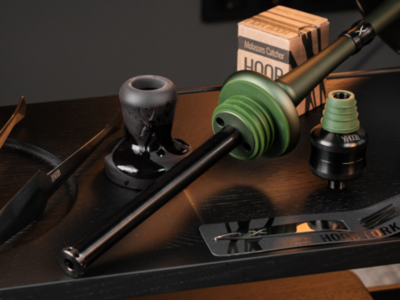
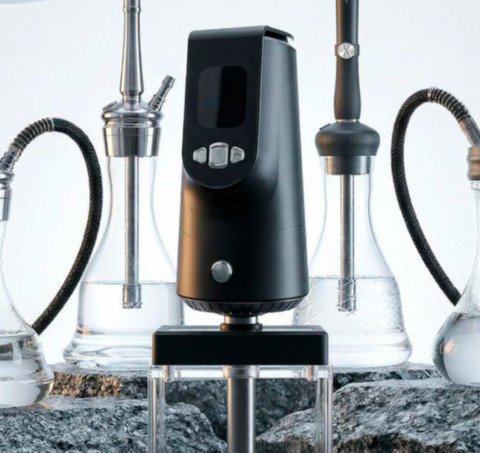
Hoob Pyro replaces foil and regulates heat transfer from charcoal to the hookah mixture. The official product page lists stainless-steel and zirconium-coated aluminum versions, side walls, and a lid. The starting arrangement must still be adapted to the bowl, mixture, and coal size.
Hoob Turkish
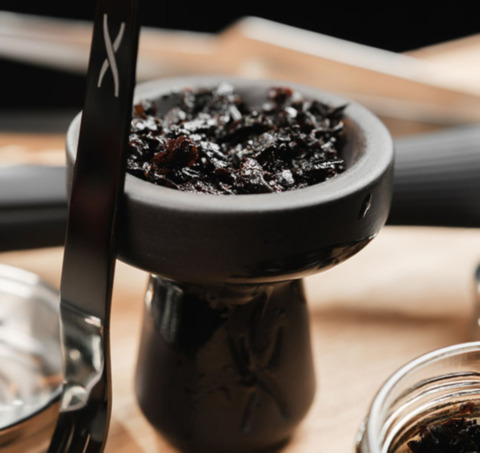
Hoob Turkish is a traditional multi-hole clay bowl with a listed capacity of 16–20 g. HOOB states that it fits most heat management devices; confirm stable seating before use.
Related products and guides
Frequently asked questions
Can I use two coals for a hookah?
Yes. Two coconut cubes often suit a small or medium bowl with a heat management device. If flavor and smoke remain weak after full preheating, adjust placement first and add a third coal only if needed.
How many coals should I use on foil?
For a medium bowl, a common starting point is three 25–26 mm coconut cubes placed evenly around the edge. A larger bowl may need more heat and a smaller bowl less; judge the response of the mixture.
How many coals go in a heat management device?
Start with two fully lit cubes. A third can be used for preheating or kept ready as a reserve, but it often becomes unnecessary once the bowl reaches its working range.
Should I close the lid?
A lid retains heat. Close it only when the device instructions allow it and the bowl genuinely needs more heat. Open or remove it using the intended handle at the first sign of overheating.
How can I reduce overheating quickly?
Move one coal to the tray, open the lid, and pause for several minutes. Test with two calm draws. If bitterness remains, inspect the pack, equipment cleanliness, and charcoal.
Should I flip the coals during a session?
Yes, when the lower face is covered with ash and heat becomes uneven. Tap ash onto the tray and turn the cube with tongs.
When should I add fresh coals?
Prepare a replacement when the active cubes have shrunk and the bowl begins to lose heat. Introduce the fully lit fresh coal in a cooler position and reassess after several minutes.
Does purging cool an overheated bowl?
Purging mainly removes part of the stale smoke from the base through the purge port. It does not replace removing or repositioning coals, so reduce the heat load first.
Sources and responsible use
Methodology
Prepared on August 17, 2026. HOOB compared Russian and international professional guidance on coal count and placement, separated recurring practical recommendations from universal claims, and verified product details on official HOOB pages. The table values are starting ranges for coconut cubes around 25–26 mm, not a laboratory standard.
Sources
- CDC: Hookahs, checked August 17, 2026.
- World Health Organization: advisory note on waterpipe tobacco smoking, checked August 17, 2026.
- Official Hoob Pyro product page, checked August 17, 2026.
- Official Hoob Turkish product page, checked August 17, 2026.
Responsible use
No hookah use is completely harmless. Burning charcoal produces carbon monoxide and other toxic substances, and water in the base does not make the smoke safe. Do not light or use charcoal in a poorly ventilated space, never leave it unattended, and do not touch hot parts. If headache, nausea, weakness, or dizziness occurs, stop immediately, move to fresh air, and seek medical help.
18+ Informational material. This article is provided for informational purposes and does not claim that hookah use is safe. HOOB does not sell tobacco or nicotine-containing products remotely. The HOOB website is a product showcase for learning about the manufacturer's range.